

Last updated October 30, 2026
 Home additions & ADU
 Kitchen remodeling
 Bathroom remodeling
 Roofing
 Windows & doors
 Driveway & pavers
 Fence
Free written scope consultation - allowances, timeline, and change-order rules on paper before a single trade is scheduled
Seasonal Construction Care for Murrieta: Year-Round Homeowner’s Guide
Murrieta homeowners who treat their house like a coastal San Diego property, assuming mild weather forgives deferred maintenance, are the ones writing the largest checks when the first significant rain of November hits an uncaulked fascia joint. The reality is that Murrieta’s climate is deceptively aggressive. Summer heat bakes roofing adhesives until they crystallize, Santa Ana winds find every loose flashing, and winter rain exploits drainage gaps created during months of dry soil. This guide walks through the seasonal inspection and maintenance sequence that prevents small failures from becoming structural repairs, with specific attention to how Murrieta’s clay soil, wind corridors, and hardiness zone change the rules compared to neighboring coastal communities. For a broader overview, see The Complete Guide to Construction in Murrieta.
Quick Answer
Seasonal construction care in Murrieta means timing inspections around three climate events: pre-summer heat checks on roofing and attic ventilation, pre-rain drainage and sealing work in October, and post-Santa Ana wind inspections on fencing, cladding, and roof edges. Homes here fail most often at material transitions: fascia-to-roof joints, siding-to-window openings, and hardscape-to-foundation edges. A twice-yearly walkthrough addressing those transition points prevents the majority of costly repairs we encounter.
Styles & brands we work with
Table of Contents
- Summer Heat: Roofing, Attic Ventilation, and HVAC Before the 100-Degree Weeks
- Santa Ana Wind Season: Fencing, Roofing, and Cladding Inspection After Every Event
- Fall Pre-Rain Checklist: Grading, Drainage, and Hardscape Sealing Before Saturation
- Winter Freeze Cycles: Irrigation, Exposed Plumbing, and Concrete Behavior
- Spring Post-Rain Inspection: Catching Moisture Before It Becomes Mold or Rot
- Material Longevity: How Murrieta’s Climate Accelerates or Slows Product Wear
- Common Mistakes to Avoid
- When to Call a Professional
- Frequently Asked Questions
Summer Heat: Roofing, Attic Ventilation, and HVAC Before the 100-Degree Weeks
Murrieta regularly sees stretches above 100 degrees, with roof surface temperatures running 40 to 60 degrees hotter than the ambient air. That means your shingles are cycling between 70-degree overnight lows and 160-degree afternoon peaks every single day from June through September. This thermal expansion and contraction is what kills roofing adhesives, not rain. The sealant strips that bind shingle tabs together become brittle, crack, and release, leaving thousands of small gaps where wind can get underneath and tear sheets off during the next Santa Ana event.
Before the heat arrives, walk the home’s perimeter and look up. Check for shingle edges that appear lifted or curled. Those are signs the adhesive is failing. Next, verify attic ventilation. Murrieta attics need balanced intake and exhaust to prevent the attic from becoming an oven that radiates heat back into the living space and prematurely ages the roofing material from below. What most homeowners don’t know is that inadequate attic ventilation voids the warranty on most major roofing products. GAF, CertainTeed, and Owens Corning all publish ventilation requirements in their installation specifications. If your attic doesn’t meet those specs when the roof fails, the manufacturer will reject the claim. This is not a small detail. We’ve replaced roofs where the shingles were only 12 years into a 30-year warranty, and the claim was denied because the original roofer never added ridge venting.
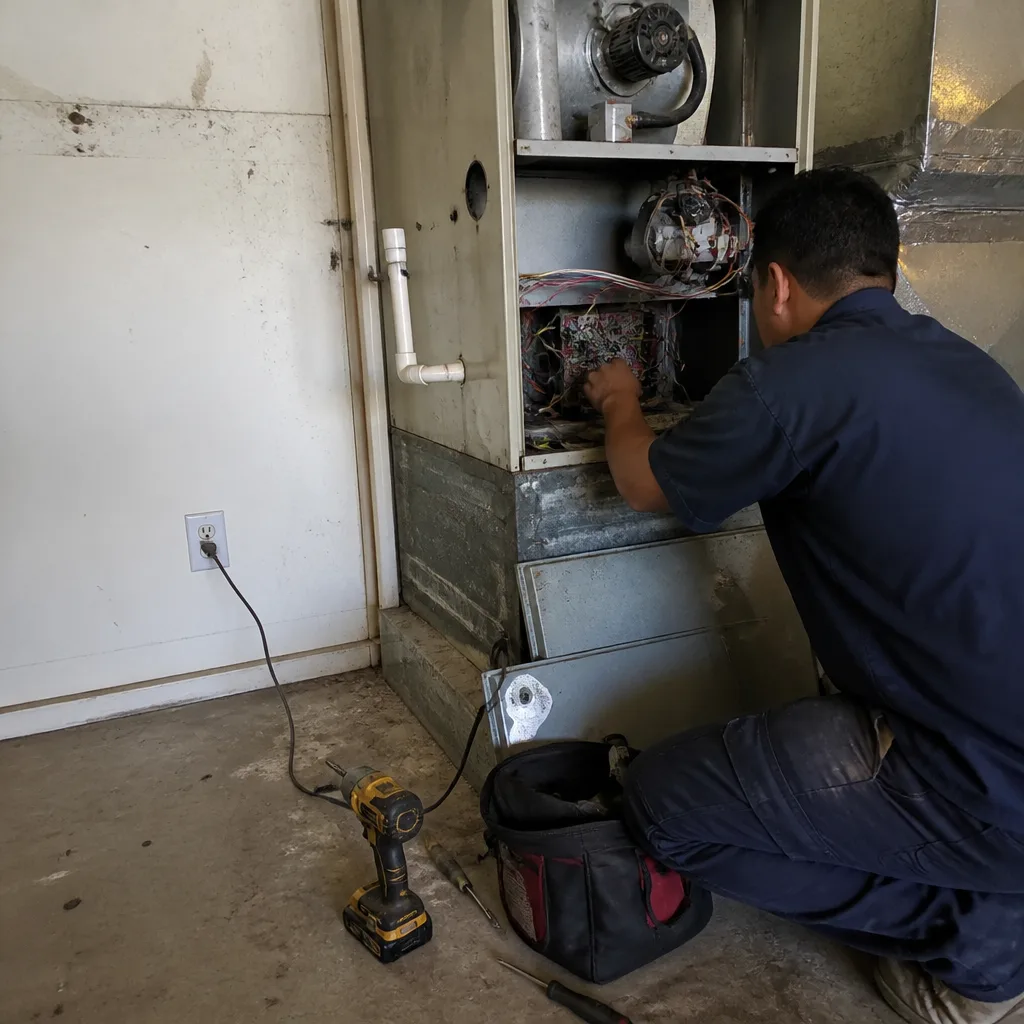
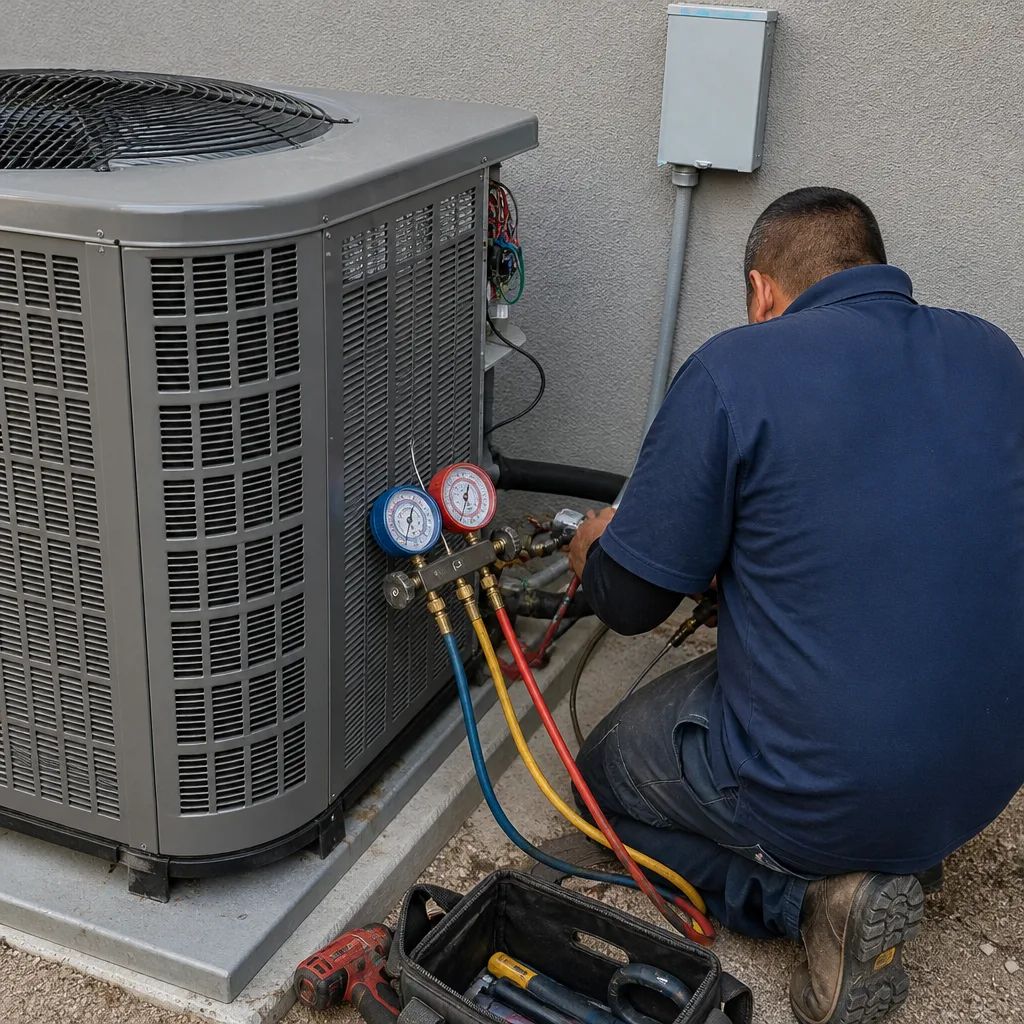
For HVAC, the pre-summer check is less about construction and more about protecting what’s already in place. Condensate lines clog, capacitors weaken during low-demand winter months, and coils accumulate dust that reduces efficiency by up to 15 percent. Murrieta’s dry summer also means outside condenser units draw in more dust and pollen than coastal units do, so filter replacement should happen every 30 to 45 days during peak heat, not every 90.
Here’s the pre-summer checklist we recommend for Murrieta homes:
- Inspect roof shingles from the ground for curling edges, missing granules, or lifted tabs.
- Verify attic ventilation: intake vents at the eaves and exhaust vents at the ridge or high gables, both unobstructed by insulation or debris.
- Clear condenser unit surroundings of dry brush and debris, and check condensate drain lines for clogs.
- Seal any visible gaps around window and door trim with exterior-grade caulk before the heat causes existing sealant to crack further.
- Check exterior paint and stain on south-facing and west-facing walls, which take the direct afternoon heat.
Santa Ana Wind Season: Fencing, Roofing, and Cladding Inspection After Every Event
Santa Ana winds in Murrieta don’t just blow; they gust in unpredictable directions that stress different parts of the structure on different days. A fence that survived three seasons of moderate wind can fail during a single 50-mph gust from an unusual angle. The specific concern in Murrieta is the combination of dry conditions and high wind, which turns a small loose board into a piece of debris that can damage siding, windows, or a neighbor’s property.
After any wind event above 30 mph, walk the property with a specific sequence in mind:
- Fencing: Check post bases for soil erosion around the concrete footings. Dry soil contracts, leaving a gap around the post that lets the structure sway. Look for leaning posts, cracked rails, and loose pickets. Wood fencing is the most vulnerable; vinyl and metal systems handle wind better but still rely on post depth and proper concrete placement.
- Roofing: Scan for missing shingles, lifted hip and ridge caps, and displaced flashing around chimneys and vents. In Murrieta, the wind typically pushes from the northeast, so the northeast-facing roof slopes take the most abuse. Check those first.
- Exterior cladding: Look for siding that has pulled away from the wall, cracked stucco at corners, and any gaps around window and door frames. Those gaps are entry points for both water and embers during fire season.
- Gutters and downspouts: Wind deposits leaves, dirt, and sand into gutter runs, which then back up during the next rain. A clear gutter in September becomes a clogged one by November if wind events aren’t followed by clearing.
Some of this work is appropriate for homeowners. Replacing a loose picket or clearing small debris is straightforward, as covered in The Complete General Contractor Guide for Murrieta Homeowners. But when we see a fence post that rocks in its footing, that’s a contractor call. A post that moves now will move more during the next wind event, and the repair stops being a post replacement and becomes a section rebuild. Similarly, any roofing damage beyond a single missing shingle warrants a professional assessment. The underlying underlayment is what keeps water out, and if that’s torn, the repair isn’t just cosmetic.
Fall Pre-Rain Checklist: Grading, Drainage, and Hardscape Sealing Before Saturation
Murrieta gets roughly 13 to 15 inches of rain per year, and most of it arrives between November and March. That’s not a lot of water by national standards, but here’s what distinguishes Murrieta: the soil is expansive clay. During the dry season, clay contracts and pulls away from foundation walls, creating a gap at the soil-to-structure interface. When the first heavy rain arrives, that clay absorbs water, expands dramatically, and puts lateral pressure on foundations and retaining walls. This is why grading matters more in Murrieta than it does in areas with sandy or loamy soil.
The fall pre-rain checklist starts with looking at every place water touches the building:
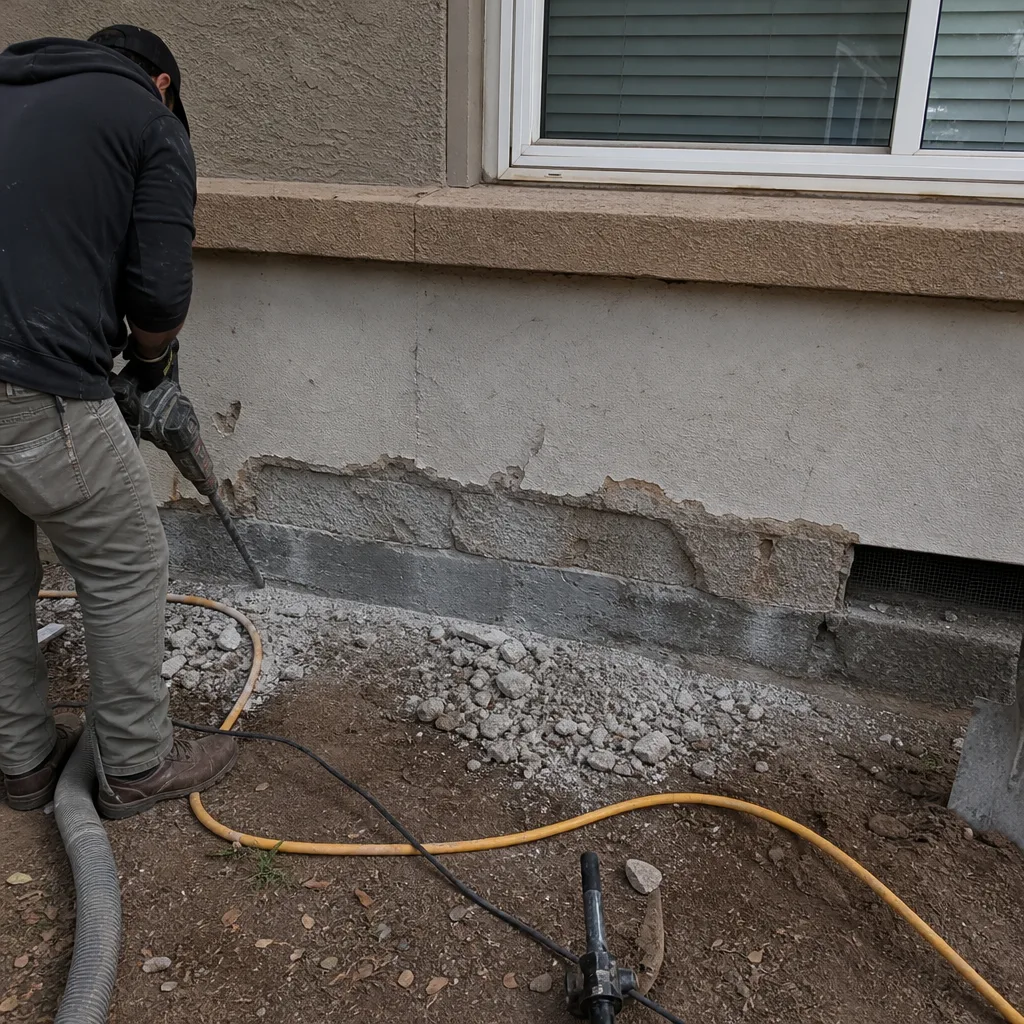
- Grade check: Ensure soil slopes away from the foundation at a minimum of 6 inches of fall over the first 10 feet. If you see soil that’s settled back toward the house, add fill dirt before the rains start.
- Downspout extensions: Every downspout should discharge at least 5 feet from the foundation. A downspout that dumps water at the corner of the house is directing water straight into the soil that’s already saturated and expanding.
- Hardscape joint sealing: Pavers and concrete joints open up during dry season as the sub-base settles. If those joints aren’t sealed before rain, water filters through, saturates the sub-base, and causes paver shifting. For paver patios and walkways in Murrieta, we recommend polymeric sand or joint sealer from brands like Oldcastle or Quikrete. These products bind the joints while still allowing some flexibility for thermal movement.
- Window and door weatherstripping: Check exterior seals around all openings. The first rain of November finds every gap that opened during summer heat.
- Fascia and trim caulking: Fascia boards are the horizontal trim running along the roof edge. The joint where fascia meets roof decking is a primary water intrusion point in Murrieta homes. Recaulk before rain, not after.
One thing we emphasize to homeowners is that drainage problems are almost always cumulative and slow-moving. You won’t see the damage when it’s happening. You’ll see it in March, when you notice a sticking door, a cracked tile, or a musty smell in a room that stayed dry all summer. The fall checklist is about preventing that March discovery.
Winter Freeze Cycles: Irrigation, Exposed Plumbing, and Concrete Behavior
Murrieta occasionally drops below freezing on clear winter nights, usually between December and February. Those freeze events are brief, seldom lasting more than a few hours before morning sun raises the temperature. But that’s long enough to burst exposed irrigation lines and cause surface spalling on concrete. What makes Murrieta’s freeze behavior different from freeze-heavy climates is that the soil doesn’t freeze deeply, so foundation movement is less of a concern. The risk is concentrated on the surface: pipes that run along exterior walls, irrigation components, and concrete that’s already weakened by summer expansion cycling.
Here’s what matters for freeze preparation in Murrieta:
- Irrigation systems: Shut off the system at the main valve, drain the lines, and blow out any remaining water if you have the equipment. An irrigation line that freezes and bursts won’t show itself until the first watering cycle in spring, by which point the water has been leaking underground for weeks.
- Exposed plumbing: Hose bibs, especially those on north-facing walls, are the most vulnerable. Install freeze caps or insulated covers before the first predicted freeze. Pipes running through exterior walls with poor insulation are the next concern. If you had a freeze-related burst last year, the underlying insulation gap is still there.
- Concrete surfaces: The freeze-thaw cycle itself is less damaging in Murrieta than in colder climates, but the combination of summer expansion, fall rain absorption, and a freeze event can cause micro-spalling on concrete that’s already cracked or poorly sealed. If you see small surface flakes, that’s water entering microscopic pores and expanding when it freezes. A penetrating concrete sealer from Sakrete or Oldcastle adds a protective layer before the freeze cycle begins.
- Roof flashing and gutters: Ice dams are rare in Murrieta, but standing water in a gutter that freezes can create a dam that backs water up under shingles when it thaws. Keep gutters clear through winter, even if it means checking them more often than you’d like.
The good news is that Murrieta’s freeze risk is manageable. You’re not dealing with weeks of sub-zero temperatures or frozen ground. But the homeowner who ignores a freeze warning because it’s “only going to hit 28 for a couple of hours” is the same homeowner who discovers a split exterior pipe in February.
Spring Post-Rain Inspection: Catching Moisture Before It Becomes Mold or Rot
By March, Murrieta’s rain season is winding down and the soil is as saturated as it’ll get all year. That saturation is exactly what you need to find drainage flaws and moisture intrusion points. A wall that looks dry in August may show staining in March because moisture has been migrating through the framing for weeks. This is the most important inspection of the year, and it happens after the last significant rain, not during it.
Follow this sequence:
- Interior walls and ceilings: Start inside. Look for water stains, bubbling paint, or warped baseboards along exterior walls, especially at the bottom plates and around window and door openings. Those are the places water enters when grading is wrong or flashing fails.
- Attic access: Open the attic and check the underside of the roof decking for dark stains or mold growth. Look specifically at the northeast-facing slopes where Santa Ana winds tested the shingles. Water entering through a loose shingle or failed flashing shows up here first.
- Crawlspace or basement: If the home has a crawlspace, check for standing water, saturated ground cover, or moisture on foundation walls. Murrieta’s clay soil holds water against foundation walls for weeks after rain, even if the surface looks dry.
- Exterior walls and trim: Walk the exterior checking for cracked stucco, separated siding joints, and soft or swollen wood around window and door frames. Press your thumb into any suspect wood; if it gives, the moisture has been there a while.
- Hardscape and retaining walls: Look for paver movement, cracks that have widened, and retaining walls that have tilted or developed bulges. These movement indicators tell you where water has been undermining the sub-base.
The spring sequence is about catching problems while they’re still cosmetic. Moisture that sat in a wall for six weeks causes mold by eight weeks and structural decay by six months. The cost to repair staining and reseal a window opening might be a few hundred dollars. The cost to remediate mold, rebuild a wall section, and replace damaged framing starts in the thousands and goes up from there. If you’re a homeowner planning a remodel anyway, spring is also the time to bring in a general contractor to assess how the home performed through the wet season before you invest in renovating a room that has hidden moisture damage behind the wall. A home remodeling in Murrieta project should never start with a surprise discovery behind the drywall.
Material Longevity: How Murrieta’s Climate Accelerates or Slows Product Wear
Product manufacturers publish lifespan estimates based on national averages, but Murrieta’s specific conditions shift those numbers in predictable ways. Understanding these adjustments helps homeowners make better material choices when renovation time comes. The team at Pinecrest Contractors home has watched enough material cycles in this market to know which products hold up and which need earlier replacement.
Roofing: Asphalt shingle roofs in Murrieta run 3 to 5 years shorter than manufacturer estimates because of UV exposure and daily thermal cycling. A 30-year architectural shingle realistically lasts 22 to 26 years here. Tile and metal roofing fare much better; concrete tile can last 50 years in Murrieta’s climate with proper fastening, and standing seam metal roofs are nearly immune to the heat cycling that kills shingle adhesives.
Siding: Wood siding in Murrieta requires more frequent repainting than in coastal climates because the dry air and UV exposure accelerate paint breakdown. Fiber cement products like James Hardie hold paint significantly longer, which is why they’ve become common in this market. Stucco performs well structurally but develops hairline cracks that need annual monitoring. Those cracks are cosmetic until they’re not, and the first rain that finds one turns it into a moisture issue.
Fencing: Wood fencing in Murrieta’s dry climate is less affected by rot and more affected by UV degradation and wind fatigue. Posts set in concrete still loosen as the surrounding clay soil cycles between dry contraction and wet expansion. Metal and vinyl fencing systems resist the climate better but rely on proper installation depth. A fence post set at 24 inches in Murrieta’s clay soil may hold for a while, but 36 inches is what we consider the minimum for a durable installation here.
Hardscaping: Concrete and pavers in Murrieta face their biggest challenge from the clay sub-base, not the surface. The sub-base moves as soil moisture changes, causing cracking in concrete and separation in pavers. The best defense is proper sub-base preparation with adequate depth and good drainage. Paver systems from manufacturers like Oldcastle and Cambridge Pavers are designed to flex with minor soil movement, which is why they often outperform monolithic concrete in Murrieta’s soil conditions.
Windows and doors: The primary failure point for windows and doors in Murrieta is the seal. High heat degrades weatherstripping and caulking faster than mold or rot does. Exterior doors facing south or west may need weatherstripping replacement every 2 to 3 years regardless of the door brand. Window glazing failures, where the seal between panes breaks and condensation appears between the glass, are accelerated by the same heat cycling that damages shingles.
Common Mistakes to Avoid
- Treating Murrieta like a coastal climate: Homeowners who assume the mild weather means maintenance can wait are the ones whose fascia boards rot out after five years of unrepaired caulking gaps. The heat is doing damage even when the weather feels perfect for being outside.
- Ignoring grading problems because it “hasn’t been an issue yet”: Murrieta’s clay soil hides drainage flaws for years, then the right rain pattern exposes them all at once. The house that’s never had water problems can have a wet wall the same season the neighbor’s tree root finally changes the drainage pattern.
- Checking the roof only after a rain leak appears: By the time water shows up on a ceiling, the moisture has been inside the attic for weeks. Roof inspections should be proactive, scheduled before rain season and after wind events.
- Patching fence posts instead of replacing them: A leaning post that’s been braced or re-set in loose soil will fail at the next big wind event. The patch feels cheaper, but the eventual replacement always costs more than doing it right the first time.
- Skipping the spring crawlspace check because it’s “dirty and unpleasant”: The crawlspace is where Murrieta homes tell you the truth about their drainage. Standing water there now means a floor framing problem later.
- Using interior caulk on exterior applications: Interior caulk degrades under UV exposure within months. Exterior-grade urethane or silicone caulk is rated for the heat and sunlight that Murrieta exterior joints face all year.
- Deferring drainage corrections until “the next big renovation”: Drainage issues don’t wait for your timeline. A downspout that’s been dumping water at the foundation for three more years can turn a small repair into a foundation crack repair.
When to Call a Professional
Most maintenance tasks on this list are homeowner-appropriate: clearing gutters, checking caulking, walking the property after wind. But certain indicators signal the need for a professional assessment. Any roof damage beyond a single missing shingle warrants a contractor inspection because the underlayment may be compromised and the repair is no longer just about the visible surface. A fence post that rocks in its footing needs replacement with proper concrete, not a brace. A retaining wall showing any tilt or bulge is a structural issue that should be evaluated immediately, not watched through another rain season. Water stains on interior ceilings or walls mean moisture has already penetrated the building envelope, and the source needs to be found before the repair can be scoped. If you’re seeing any of these conditions, a general contractor in Murrieta can assess the full scope and coordinate the repair across trades. Pinecrest Contractors offers free estimates in Murrieta, call (855) 702-1622.
Frequently Asked Questions
Seasonal maintenance costs in Murrieta vary widely depending on what each inspection identifies. A basic twice-yearly inspection with minor repairs like recaulking and gutter clearing typically runs $200 to $500 per visit when done by a handyman service. Repairs identified during those inspections, like downspout extensions, fence post replacement, or minor roofing repairs, add $150 to $1,200 per item. Drainage corrections and roofing work start higher. The cost comparison that matters is preventive maintenance versus deferred repair: a $400 inspection that catches a failing flashing joint prevents a $4,000 ceiling and drywall repair six months later. For more guides & resources on protecting your investment, explore our blog. For an exact quote on your property, call (855) 702-1622, estimates are free.
Schedule two inspections per year in Murrieta: one in September or early October before rain season, and one in March or April after the last significant rain. Add a third inspection after any Santa Ana wind event above 30 mph. The pre-rain inspection focuses on drainage, grading, caulking, and roofing. The post-rain inspection focuses on moisture intrusion, crawlspace conditions, and hardscape movement. Wind-event inspections focus on fencing, shingles, and exterior cladding.
The most common seasonal problems we see in Murrieta are failed shingle adhesive strips from summer heat cycling, fascia board rot from uncaulked joints before winter rain, fence post loosening from clay soil contraction during dry season, paver shifting from insufficient sub-base preparation, and freeze-burst irrigation lines on unprotected exterior walls. These problems share a common trait: they’re all caused by the transition between dry and wet seasons, not by any single weather event.
Yes. Murrieta’s expansive clay soil contracts during the dry season, pulling away from foundation walls and creating gaps at the soil-to-structure interface. When rain arrives, the clay absorbs water and expands, applying lateral pressure to foundation walls and retaining walls. The movement is measured in fractions of an inch, but over years it causes cracking, sticking doors, and occasionally more serious structural issues. Proper grading, downspout extensions, and drainage systems reduce the moisture cycling that drives the problem.
Metal roofing and concrete tile hold up best in Murrieta’s heat because they don’t rely on adhesive strips the way asphalt shingles do. Architectural asphalt shingles still work here and are common, but their effective lifespan runs shorter than manufacturer estimates. If you’re replacing a roof, the choice between asphalt, tile, and metal should factor in the home’s ventilation, the roof slope, and the long-term ownership horizon. A home renovation in Murrieta that includes roofing should evaluate all three material types against your budget and timeline.
A fence post that rocks in its footing, leans more than a few degrees, or has visible concrete cracking around the base needs replacement, not repair. Bracing or re-setting a post in loose soil is a temporary fix that fails at the next Santa Ana wind event. The replacement requires digging out the old footing, setting a new post at proper depth, typically 36 inches in Murrieta’s clay soil, and pouring new concrete. It’s a straightforward repair for a contractor but a frustrating one to do incorrectly as a homeowner.
The Bottom Line
Seasonal construction care in Murrieta is not about dramatic interventions. It’s about understanding the specific ways this climate attacks a house: heat cycling on roofing adhesives, clay soil expansion on foundations, Santa Ana gusts on fencing, and brief freezes on exposed plumbing. The homeowners who schedule two annual inspections, respond quickly to wind events, and correct drainage issues before rain season are the ones whose homes require only routine maintenance for decades. Those who wait until problems show themselves pay three to five times more for the resulting repairs. The seasonal sequence matters because Murrieta’s climate doesn’t forgive deferred maintenance. It stores the damage up and delivers it all at once when conditions align.
If you’re planning seasonal maintenance or a larger renovation, Pinecrest Contractors coordinates the full scope, from roofing and siding to hardscape, fencing, and interior remodeling, under one contract. Start with Choosing the Right Construction Brand: A Buyer’s Guide for Murrieta to evaluate your options. Call (855) 702-1622 for a free estimate, and we’ll walk the property with you to identify what your home needs for the season ahead.
Written by the team at Pinecrest Contractors, serving Murrieta since 2014.
See the difference
 Before
 After
 Before
 After
 Before
 After