

Last updated October 30, 2026
 Kitchen remodeling
 Bathroom remodeling
 Home additions & ADU
 Roofing
 Windows & doors
 Driveway & pavers
 Fence
Free written scope consultation - allowances, timeline, and change-order rules on paper before a single trade is scheduled
How to Hire a Construction Contractor in Murrieta: A Step-by-Step Guide
Most Murrieta homeowners don’t get burned by hiring an unskilled carpenter or a careless tile setter. They get burned by hiring a contractor who turns out to be a coordinator of subcontractors, then discovering too late that they’ve become the de facto project manager themselves. The counterintuitive truth about construction hiring is that selecting the middle bid doesn’t protect you, and selecting the highest bid doesn’t either. What protects you is knowing how to verify the contractor’s actual legal scope, how to read a contract line by line, and how to ask the two or three questions that separate a true General Contractor in Murrieta from a lead generator with a truck. This guide walks through every step, specific to how construction actually works in Murrieta and Riverside County.
Quick Answer
To hire a construction contractor in Murrieta, verify their license classification on the CSLB database to confirm they can legally perform the work, require a written contract with lien waiver and material substitution clauses, compare at least three itemized bids by scope not just price, and confirm they self-perform or directly manage the major trades rather than subcontracting everything. A legitimate full-scope general contractor handles permitting, trade coordination, material procurement, and inspection milestones under one contract.
Styles & brands we work with
Table of Contents
- Step 1: Verify the License on the CSLB Database
- Step 2: Understand License Classifications and What They Mean for Permits
- Step 3: Ask the Questions That Separate a Real General Contractor from a Broker
- Step 4: What a Well-Structured Murrieta Contract Must Include
- Step 5: How to Read a Bid Comparison Correctly
- Step 6: Red Flags Specific to the Murrieta Market
- Step 7: Why Coordination Matters More Than Craftsmanship
Step 1: Verify the License on the CSLB Database
The California Contractors State License Board maintains a public database at cslb.ca.gov, and checking it takes under three minutes. You need the contractor’s license number, which should appear on their business card, website, and any bid they submit. When you look up the number, confirm three things: the license is active, the business name matches the entity you’re dealing with, and the classification covers the work you’re planning.
In Murrieta, a contractor who shows up with a “B” General Building classification can legally contract for any project involving two or more unrelated trades. That’s the classification a whole-home remodeler should hold. A “C” specialty classification, like C-36 for plumbing or C-54 for tile, permits only that single trade. A handyman with no license at all can legally perform projects under $500 in labor and materials, but many Murrieta homeowners don’t realize that threshold until a unlicensed worker has already cut into a load-bearing wall or run new electrical.
Beyond the basic check, pull the license’s history. The CSLB database shows any license suspensions, revocations, or disciplinary actions. We’ve watched Murrieta homeowners skip this step and later discover their contractor had a prior license in another classification that was suspended for abandoning a project. That’s a pattern worth knowing about before you sign anything.
Also confirm the contractor carries general liability insurance and workers’ compensation. In California, any contractor with employees must carry workers’ comp. Ask for a certificate of insurance directly from the carrier, not a photocopy from the contractor’s binder. A certificate that’s two months old may not reflect a policy that was cancelled for nonpayment.
Step 2: Understand License Classifications and What They Mean for Permits
California’s license classifications are not interchangeable, and Riverside County inspectors enforce them. If you’re planning a kitchen remodel that includes moving a gas line and relocating a sink, your contractor needs a B classification or must hold the relevant C specialties. If they only hold a C-54 tile license, they cannot legally pull a permit for plumbing modifications, which means either the permit doesn’t get pulled or someone else’s license gets used without your knowledge.
Here’s what the classifications actually mean for common Murrieta projects:
- B – General Building: Legal for projects involving two or more unrelated trades. This is what a full-scope remodeler carries. It’s the classification required for kitchen remodels, bath overhauls, additions, and ADU construction when the project spans framing, electrical, plumbing, and finishes.
- C-36 – Plumbing: Legal for plumbing work only. A plumbing-only contractor cannot legally frame walls or install cabinetry, regardless of how capable they are.
- C-54 – Tile: Ceramic and stone tile installation only. Not legal for waterproofing, shower pan replacement, or any structural work underneath the tile.
- C-39 – Roofing: Roofing installation and repair. A roofer cannot legally reframe a rotted eave without a separate classification or a B license.
- C-27 – Landscaping: Planting, irrigation, and landscape construction. Hardscape elements like retaining walls over a certain height may require a separate classification or B license.
Why does this matter so much in Murrieta specifically? Riverside County is strict about plan review and inspection milestones. The permit application names the contractor of record by license number. If that license doesn’t cover the scope of work, the permit application gets rejected or flagged, and you’ve lost weeks before demo day. We’ve seen perfectly good Murrieta remodel projects stall at the counter because the homeowner signed with a specialty contractor who couldn’t legally pull the combined permit.
Step 3: Ask the Questions That Separate a Real General Contractor from a Broker
The single most revealing question you can ask any Murrieta contractor is this: “Who will actually be on site doing the work, and who is your direct employee versus a subcontractor?” There’s no wrong answer on its face. Every general contractor uses subcontractors for licensed trades like electrical and plumbing. The red flag is when the answer is vague or when every trade including the core carpentry and project supervision is subcontracted out.
A true general contractor self-performs at least some of the work with their own crew or maintains a direct supervisory presence daily. A broker or lead generator signs the contract, takes a markup, then hands you a list of names to coordinate yourself. The difference shows up in the first week of the project, and by then it’s too late.
Here are the questions we recommend asking before you sign, in order:
- “Who holds the permits and whose license number appears on the permit application?” The answer should be unambiguous: their license, their responsibility.
- “Who do I call when something goes wrong?” If the answer is a rotating list of trade contractors, you’re signing with a broker. If the answer is one project manager or the contractor themselves, you’ve found a coordinator.
- “Which trades do you self-perform with your own employees?” Look for at least carpentry, framing, or finish work. If the answer is “none of them, we orchestrate everything,” ask how many projects they manage simultaneously and what the escalation path is when a sub doesn’t show.
- “How do you handle material selection and ordering?” A full-scope home remodeling contractor in Murrieta should offer access to multiple product lines and brand tiers. If they give you one option and one option only, you’re not being guided, you’re being channeled into whatever’s easiest for them.
- “What does your change order process look like in writing?” The answer should reference a written document signed by both parties before any additional work begins. Verbal change orders are a Murrieta market problem, and we’ll cover that in the red flags section.
We’ve said in our own consultations that the contractor’s answer to the coordination question matters more than their portfolio photos. A beautiful kitchen photo tells you what the finished product looked like. The coordination answer tells you whether your project will reach that photo without you burning vacation days to manage it.
Step 4: What a Well-Structured Murrieta Contract Must Include
A construction contract in California is governed by the Contractors State License Law, and there are specific provisions that every Murrieta project should include. If your contractor hands you a one-page bid and calls it a contract, ask for the real document. Here’s what a proper contract addresses:
- Lien waiver provisions. California mechanics lien law lets subcontractors and material suppliers file a lien against your property if the general contractor doesn’t pay them, even if you’ve paid the general contractor in full. Your contract should require the contractor to provide lien releases from every sub and supplier as payments are made, conditioned on receipt of funds. Without this clause, you can pay your contractor $80,000 in full and still have a lumber yard file a lien against your Murrieta home six months later.
- Material substitution language. The contract should specify the exact brands and models you’ve selected, and state that any substitution requires your written approval. This matters when you’ve chosen Kohler fixtures or Caesarstone countertops and the contractor attempts to swap in something similar but cheaper to protect their margin. The right language makes substitutions a conversation, not a surprise.
- Riverside County inspection milestone clauses. The contract should tie payment draws to inspection milestones: rough framing, rough electrical, rough plumbing, insulation, drywall, final inspection. In Riverside County, inspections happen at defined points, and your payment schedule should mirror them. If the contractor wants 50% upfront and 50% at the end, with no draws in between, that’s a red flag that they’re using your money to fund someone else’s project.
- Change order procedure. A written change order should be required for any scope change, any material change, any discovery of hidden conditions, and any schedule extension. The change order needs to state the cost, schedule impact, and be signed by both parties before work proceeds. We’ve seen Murrieta homeowners end a remodel owing $30,000 more than the contract price because change orders were approved verbally during walkthroughs and never documented.
- Warranty language. California requires contractors to provide a warranty of at least one year on workmanship. Your contract should state the warranty period and what it covers. If the contractor is less specific than the state minimum, that tells you something.
- Dispute resolution clause. Specify mediation or arbitration if disputes arise. It’s not a pleasant topic during a handshake, but it’s a lot better than discovering your contract has no path to resolution when something goes wrong.
On the material selection front, a contractor who works across multiple product tiers should be able to show you the trade-offs honestly. A kitchen remodel in Murrieta might pair Caesarstone on the perimeter counters with a more budget-conscious option on the island, or Kohler plumbing fixtures in the primary bath with Moen in the secondary bath. The point is that you see the options and choose, not that the contractor chooses for you.
Step 5: How to Read a Bid Comparison Correctly
The most common bid analysis mistake is comparing the bottom-line numbers only. Three bids for a Murrieta kitchen remodel might come in at $62,000, $78,000, and $96,000, and the homeowner chooses the middle one assuming it’s the safe play. But the numbers don’t tell you anything until you compare scope, allowances, and exclusions line by line.
Here’s what to check in every bid:
- Allowance amounts. Flooring, tile, fixtures, and lighting are often bid as allowances. A $5,000 fixture allowance in one bid and a $12,000 allowance in another tells you two contractors are showing you two different bathrooms. The bid with the lower allowance isn’t cheaper; it’s just showing you a cheaper scope.
- Exclusions. Read the fine print for what’s not included. Demolition, debris hauling, permits, engineering, plan fees, and finish work are the common exclusion zones. A bid that excludes permits isn’t a lower bid; it’s an incomplete bid.
- Line-item detail. A legitimate bid itemizes labor and materials by trade or phase. A bid that’s one number with “includes everything” should make you nervous. It’s not a scope document; it’s a hope.
- Schedule. Each bid should include an estimated start date, duration, and payment draw schedule. If the schedule is missing, the contractor hasn’t thought through the project.
The variance between the low and middle bids often tells you what’s being left out. If one bid is 20% lower than the other two, the low bidder is almost certainly either excluding scope, using lower-grade materials without saying so, or planning to make it up in change orders. A truly honest bid in the Murrieta market rarely comes in dramatically below its competitors since the cost of labor, permits, and materials is roughly the same for everyone.
The highest bid isn’t necessarily a red flag either. It may reflect a contractor who is actually pricing what the project really costs and simply has the discipline to not underbid. The middle-range variance is where you’ll find the honest spread. Your job is to call the middle and high bidders and ask them to walk you through their assumptions. The conversation will reveal more than the numbers.
Step 6: Red Flags Specific to the Murrieta Market
Every market has its own contractor pathologies, and Murrieta’s are shaped by the city’s position in southwest Riverside County. Homes here are newer on average than in coastal markets, the neighborhoods were built in waves over the past three decades, and the permitting office is part of a county system that sees a high volume of applications. The result is a set of red flags specific to this area.
- The unlicensed handyman upsell. Murrieta has a visible handyman economy, and many of these operators are perfectly competent at small repairs. The problem starts when a small repair becomes a remodel, and the handyman doesn’t tell you they’re not licensed for it. If you hear “we don’t need a permit for this” from someone without a license, get a second opinion. Riverside County pulls for structural, electrical, plumbing, and mechanical work regardless of what anyone says.
- Out-of-area contractors unfamiliar with local inspection culture. A contractor from Los Angeles or Orange County may be excellent, but if they’ve never worked with Riverside County inspectors, they’ll burn your project’s schedule learning the local rhythms. Ask how many projects they’ve completed in Murrieta or Temecula specifically, and ask for references from those projects.
- Verbal change-order practices. Some contractors in the Murrieta market treat change orders as a conversation, not a document. “We’ll just add that and settle up at the end” is a sentence that has cost local homeowners tens of thousands. Every change order should be written, priced, signed, and executed before the work happens.
- The “complete” remodel that isn’t. Murrieta’s housing stock includes many homes built in the 1980s and 1990s that have never had major systems replaced. A contractor who prices you a kitchen remodel without checking the condition of the subfloor, the electrical panel, or the plumbing supply lines is pricing a surprise. A thorough contractor sends someone to inspect the whole system before the bid is finalized.
- The subcontractor shell game. The contractor you hire should be the contractor whose name is on the permit and whose crew is on site. Murrieta homeowners have found themselves paying a contractor who then paid a different contractor to run the job, and that second contractor was someone the homeowner had never vetted. Ask who will be on site by name, and hold them to it.
For any home renovation project in Murrieta, these red flags are avoidable if you ask the right questions before you sign. The best contractor conversation you’ll ever have is the one where you ask about lien releases, license classifications, and change order procedures, and the answers all line up.
Step 7: Why Coordination Matters More Than Craftsmanship
Every licensed contractor in Murrieta can produce a portfolio of finished projects. Craftsmanship, while real, is not as rare as homeowners think. What’s genuinely rare is coordination. A kitchen remodel requires demo, framing, rough plumbing, rough electrical, HVAC adjustment, drywall, painting, cabinet installation, countertop templating and fabrication, plumbing trim, electrical trim, backsplash tile, and appliance installation. That’s a minimum of twelve separate phases, and if the person responsible for sequencing them isn’t managing the schedule daily, the project slips a week at a time without anyone noticing until the family is eating microwave meals in the garage in November.
The hidden cost in most bad contractor experiences isn’t bad workmanship. It’s the homeowner’s time, the project’s delay, the rework from trades showing up in the wrong order, and the emotional drain of playing project manager for a job you hired someone else to manage. A full-scope general contractor earns their margin through coordination: one schedule, one point of accountability, one sequence that flows from demo to final inspection without the homeowner making a single phone call to chase a subcontractor.
When you’re evaluating contractors for a whole-home project that spans interior and exterior work, the coordination advantage compounds. One contractor who handles the kitchen remodel, the siding replacement, and the hardscape under one contract means one permit strategy, one schedule, and no disputed responsibility when a window leak is discovered during the siding replacement and needs to be fixed before the cabinetry goes in. If those trades belong to three different contractors, the homeowner becomes the referee. If they belong to one, they just get fixed.
We tell Murrieta homeowners to ask about the coordination plan directly: “Walk me through how you’ll sequence this project and who manages the schedule day to day.” The answer tells you more than any photo gallery.
Common Mistakes to Avoid
- Skipping the CSLB lookup. Three minutes on the database would have revealed that the contractor’s license is expired or in a different classification than the work you’re hiring them to do. Do it before you sign, not after you’ve paid a deposit.
- Signing before understanding the scope. When a contractor hands you a contract with a single line item like “kitchen remodel – $78,000” and no itemized scope, you’re signing a blank check. Ask for line-item detail before you sign anything.
- Paying too much upfront. California law allows a down payment, but it should be proportional to the work. If a contractor wants 50% or more before demo starts, that’s a cash-flow red flag, not a sign of confidence.
- Comparing bids without comparing scope. The $62,000 bid and the $96,000 bid are frequently describing two different projects. You have to compare allowances, exclusions, and line items, not just the bottom line.
- Hiring for price instead of process. The contractor who costs 10% less but makes you manage the schedule, chase the subs, and double-check the permit status costs you more in the long run than the one who coordinates everything under one roof.
- Not getting lien releases as you pay. Every progress payment should come with conditional lien releases from the subs and suppliers who worked on that phase. Without them, you could pay in full and still face a lien claim.
See the difference
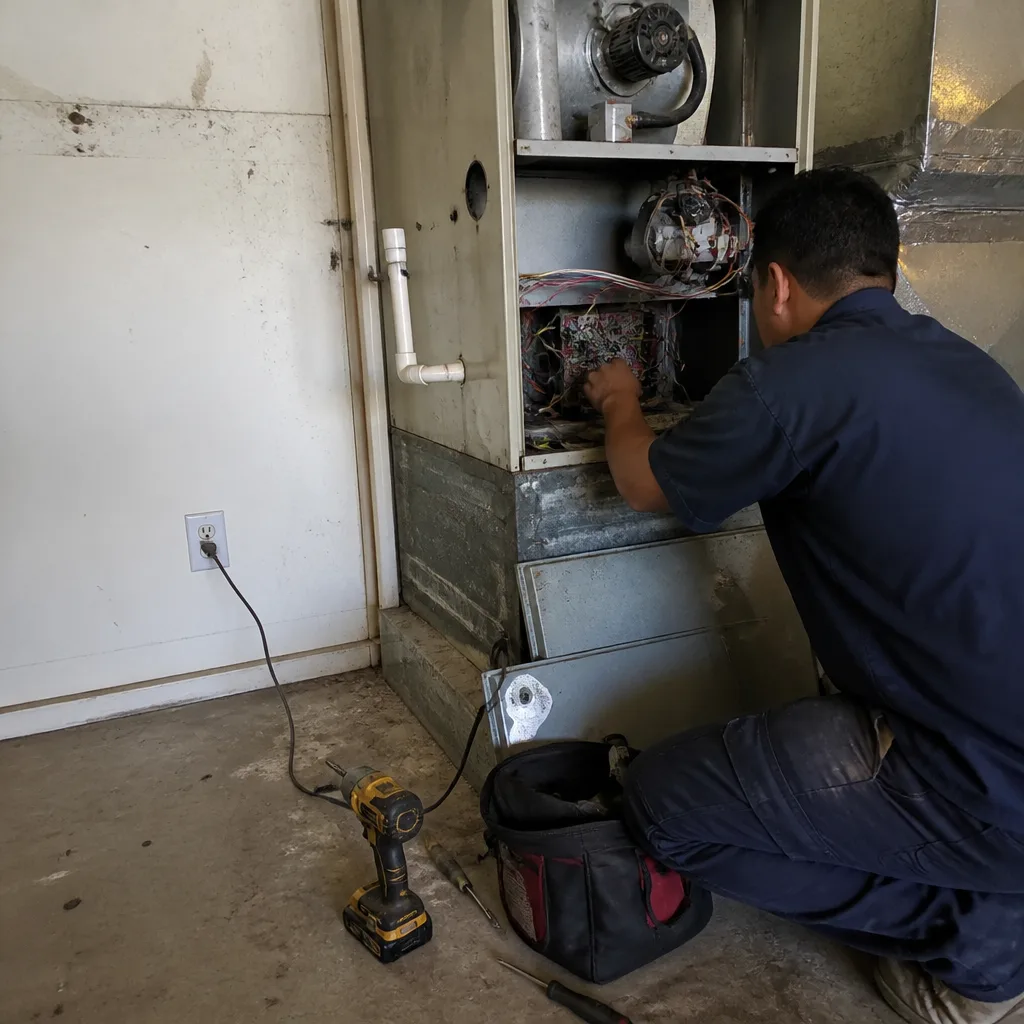 Before
 After
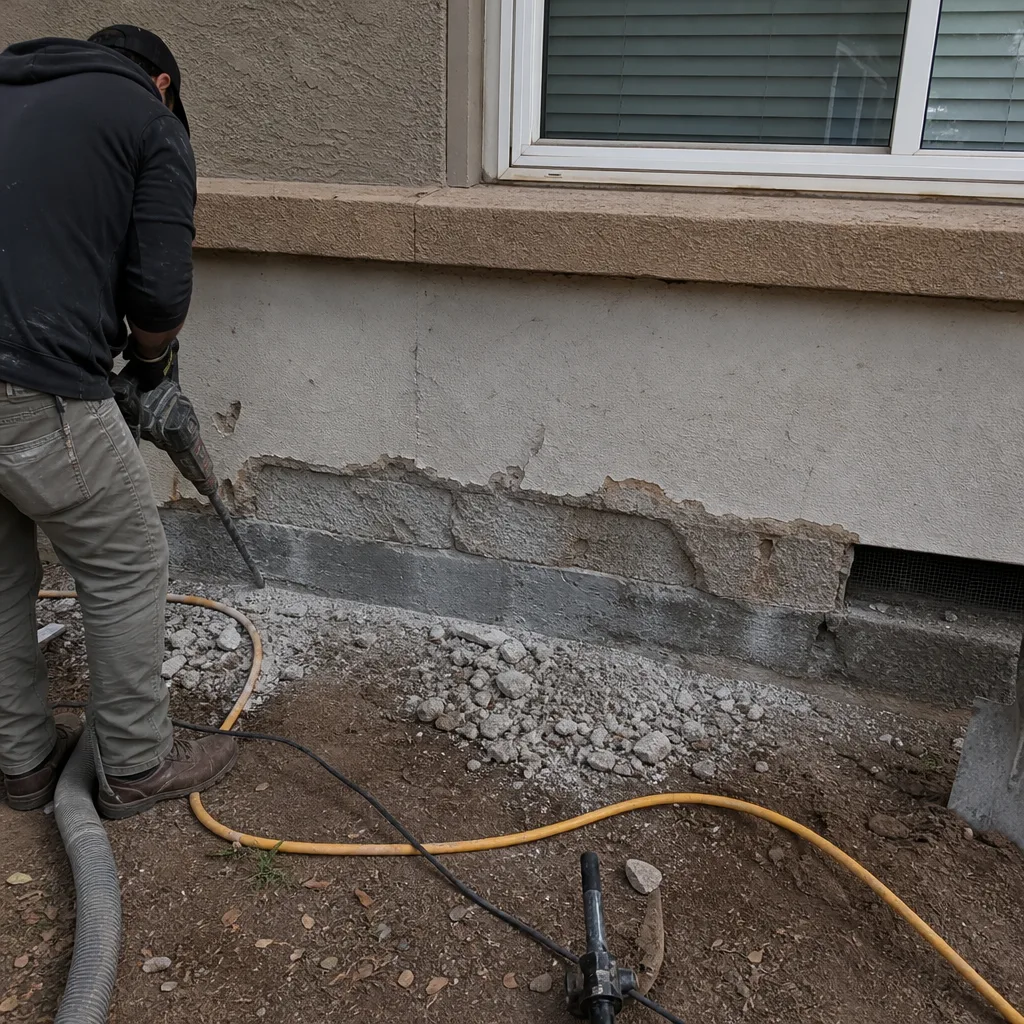 Before
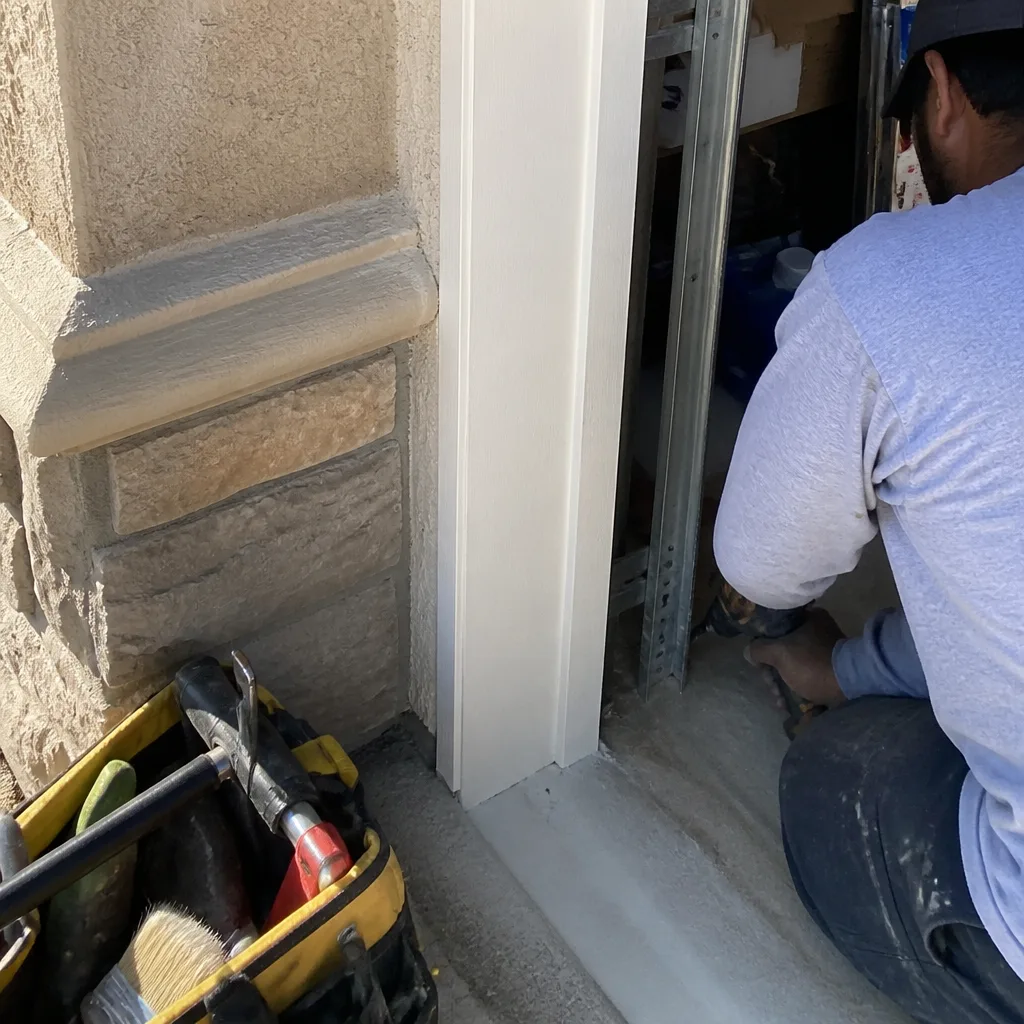 After
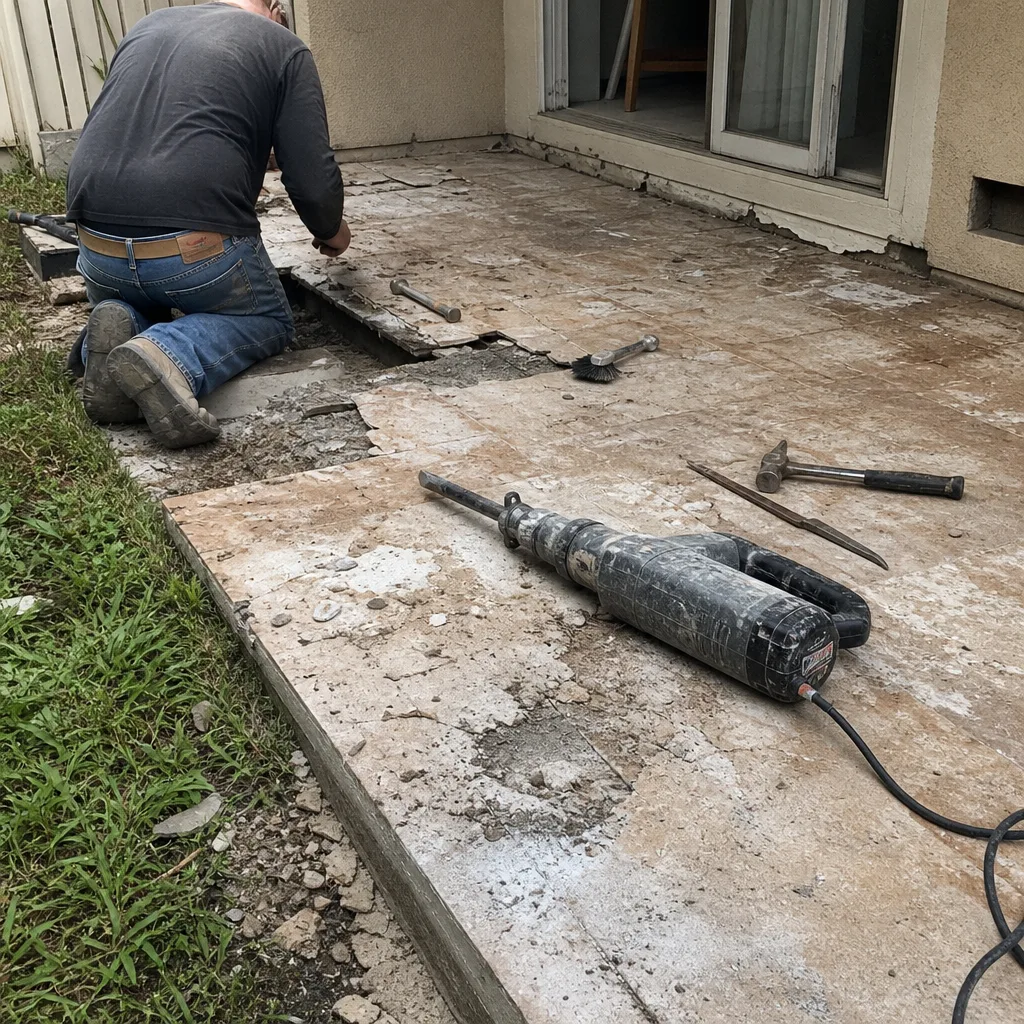 Before
 After
When to Call a Professional
If your project involves moving walls, relocating plumbing, running new electrical, replacing a roof, or any structural work, you need a licensed general contractor, period. The same applies if your project spans multiple trades, because the coordination risk alone is reason enough to hire a single accountable contractor. If you’re planning a whole-home renovation or a project that touches both interior and exterior systems, the coordination complexity justifies professional management from day one. Pinecrest Contractors offers free estimates in Murrieta – call (855) 702-1622 to schedule yours.
Frequently Asked Questions
Murrieta construction costs run roughly 10-15% higher than national averages due to California labor rates and Riverside County permit requirements. A kitchen remodel typically starts around $45,000-60,000 for a mid-range scope, a primary bathroom remodel runs $25,000-40,000, and a full home remodel in Murrieta starts at $150,000 and goes up from there. General contractor fees, usually 15-20% of the project cost, are included in the bid, not added on top. For an exact quote on your project, call (855) 702-1622.
Go to cslb.ca.gov and enter the contractor’s license number in the license check tool. Confirm the license is active, the business name matches, and the classification covers your project scope. The CSLB also shows any disciplinary actions or suspensions in the license history.
Yes, for structural changes, electrical work, plumbing modifications, and most kitchen and bathroom remodels in Murrieta, permits are required through the city’s building department or Riverside County. Your contractor should pull the permit in their name, and if they suggest skipping permits to save time or money, that’s a signal to find a different contractor.
A general contractor holds a B license and is legally responsible for the entire project, including permits, scheduling, and all subcontractors. A subcontractor holds a specialty license for one trade, like plumbing or electrical, and works under the general contractor’s direction. Hiring subcontractors directly means you become the coordinator and assume the legal liability.
A typical Murrieta kitchen remodel takes 8-12 weeks from demo to final inspection, depending on permit approval timelines, material lead times, and the scope of structural changes. Custom cabinetry or specialty countertop fabrication can extend the schedule by 2-4 weeks. Call (855) 702-1622 for a project-specific timeline.
Decline politely and ask for it in writing. A proper change order states what’s changing, how much it costs, how it affects the schedule, and requires both signatures before work proceeds. Verbal change orders are unenforceable and a leading cause of budget disputes in Murrieta construction projects.
The Bottom Line
Hiring a contractor in Murrieta comes down to verification, documentation, and coordination. Verify the license classification on the CSLB database. Document everything in a contract that includes lien waiver provisions, material substitution language, and Riverside County inspection milestone clauses. And choose a contractor who coordinates the entire project under one roof, because fragmented project management, not bad craftsmanship, is where most construction projects go wrong. Pinecrest Contractors offers free, itemized estimates for home renovation projects in Murrieta. Call (855) 702-1622 to schedule yours.
Written by the team at Pinecrest Contractors, serving Murrieta since 2014.