

Last updated October 30, 2026
 Home additions & ADU
 Kitchen remodeling
 Bathroom remodeling
 Roofing
 Windows & doors
 Driveway & pavers
 Fence
Free written scope consultation - allowances, timeline, and change-order rules on paper before a single trade is scheduled
Construction Warning Signs: A Murrieta Homeowner’s Reference Guide
A hairline crack above a door frame and a horizontal crack in a block wall both look like “settling” to most homeowners, but one is cosmetic and one is a structural warning that no amount of paint will resolve. The difference between the two is rarely obvious without knowing what to look for. This guide gives you that skill. We’ll walk through the warning signs that matter in Murrieta specifically, where our clay-heavy soil, dry heat, and UV exposure create failure patterns that differ from coastal or mountain communities. By the end, you’ll know which signs to monitor, which to schedule for repair, and which require action this week.
Quick Answer
Construction warning signs fall into three categories: cosmetic signals you can monitor, deteriorating conditions that need scheduled repair, and active failures that require immediate professional attention. In Murrieta, the most common warning signs are horizontal or stair-step cracks in exterior walls (often soil-related), granule loss and flashing separation on roofs (from UV and heat cycling), and moisture-related paint failure or wood deterioration around windows and doors. The single most important diagnostic rule: if a crack is wider than 1/8 inch, changing orientation, or paired with a door or window that now sticks, treat it as structural until proven otherwise.
Styles & brands we work with
Table of Contents
- A Crack Diagnostic Framework: Cosmetic, Settlement, or Structural
- Roof Warning Signs Specific to Murrieta’s Heat and UV
- Moisture Intrusion Signals in an Inland Valley Climate
- Electrical and HVAC Warning Signs in 1990s-Era Murrieta Homes
- The Triage System: Monitor, Schedule, Act Immediately
- Siding, Window, and Hardscape Signs That Precede Bigger Failures
- Common Mistakes to Avoid
- When to Call a Professional
A Crack Diagnostic Framework: Cosmetic, Settlement, or Structural
Crack diagnosis starts with three data points: pattern, orientation, and width. Most homeowners look at a crack and see one thing. A builder looks at the same crack and reads a story. In Murrieta, the story usually involves expansive clay soil that swells when wet and shrinks when dry, a cycle that stresses foundations differently than the sandy soils nearer the coast.
Here’s the framework we use when evaluating cracks on Murrieta homes:
- Measure the width. Cracks under 1/16 inch are almost always cosmetic, typically stucco shrinkage or minor drywall seam movement. Cracks between 1/16 and 1/8 inch need monitoring. Cracks over 1/8 inch warrant a professional evaluation, especially if they appear suddenly or coincide with other symptoms.
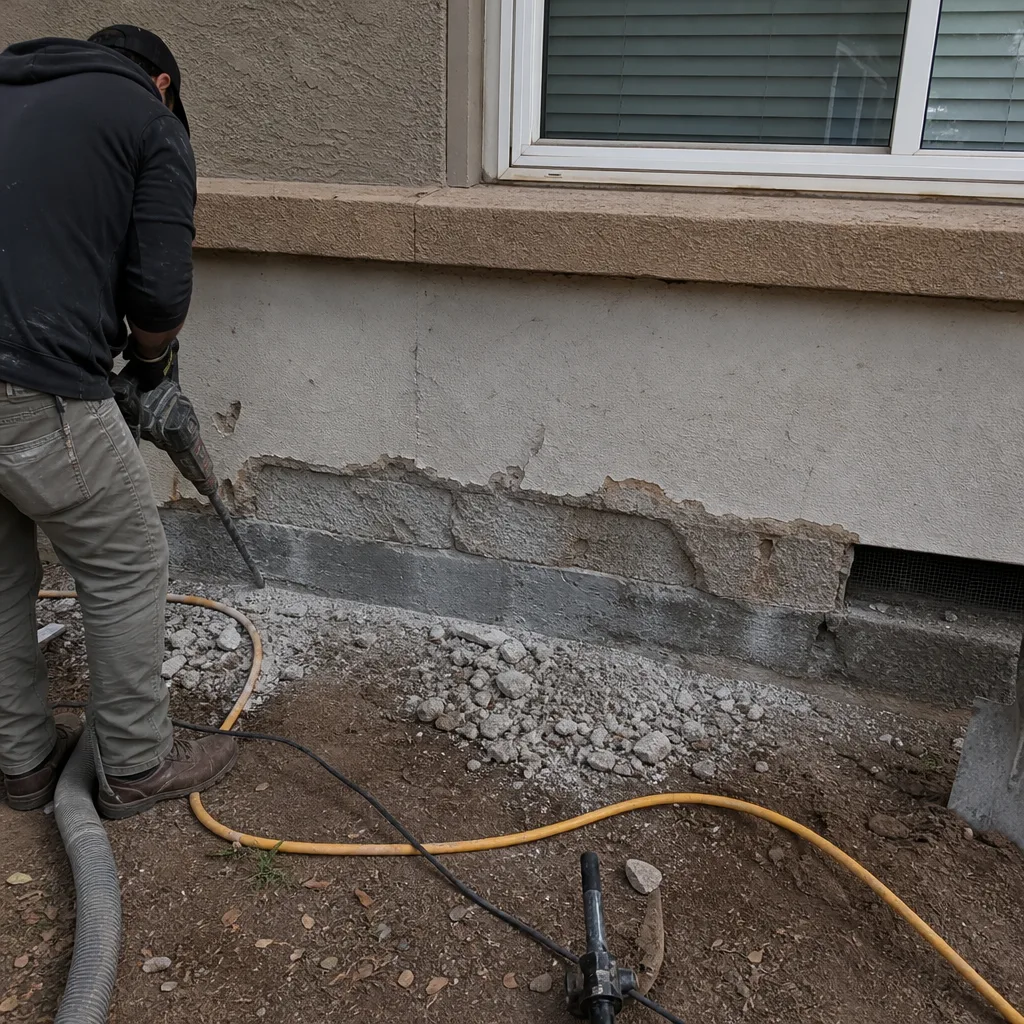
- Note the orientation. Vertical cracks in stucco are frequently shrinkage-related and benign. Horizontal cracks in block walls or foundation stems are a different story. A horizontal crack that runs along a mortar joint in a retaining wall or stem wall often indicates lateral pressure, which in Murrieta typically means soil expansion against the wall. Diagonal cracks that begin at a window or door corner and angle toward the ceiling are classic differential settlement signals, usually the result of one corner of the foundation moving more than the others.
- Check for pattern. Stair-step cracks that follow mortar joints in block or brick are the diagnostic signature of foundation movement. When you see a stair-step pattern on an exterior wall and the same wall shows a corresponding interior crack in sheetrock, you’re looking at a single event or ongoing movement, not two separate cosmetic issues.
- Test doors and windows. A door that used to latch cleanly now rubs the jamb or fails to close. A window that once opened easily now binds. Either condition, paired with a crack anywhere west or east of that opening, strengthens the case for differential settlement rather than simple aging.
- Track change over time. Mark the ends of any crack wider than 1/16 inch with a pencil and date. Measure width monthly for six months. A crack that grows, lengthens, or changes orientation is active. Active cracks require a foundation or structural evaluation before any cosmetic repair. Painting over active movement is money spent twice.
In Murrieta subdivisions built between 1985 and 2005, much of the housing stock sits on engineered fill or graded pads cut into the hillsides. Fill that wasn’t compacted to spec settles unevenly over years, and the first visible evidence is usually a diagonal crack at a door corner or a gap opening between wall and ceiling. We’ve walked homes in Murrieta where a 1/4-inch ceiling gap had been painted over three times, each time reopening within months. That’s the definition of active movement.
For homeowners planning a kitchen remodel or room addition, crack diagnosis matters before the first cabinet comes out. Installing tile, quartz countertops, or new framing on a slab or wall plane that’s still moving locks in future failure. A full-scope contractor evaluates the structure before the finish work begins, which is the practical reason a home remodeling project in Murrieta should begin with a site walk, not a material selection session.
Roof Warning Signs Specific to Murrieta’s Heat and UV
Murrieta gets roughly 270 sunny days a year, summer temperatures that routinely push past 100°F, and UV indices that sit in the very high to extreme range from May through September. That exposure profile ages roofs differently than rain-driven climates. The failure sequence here is thermal expansion fatigue first, water intrusion second.
What does that mean for you? The visual signs are subtle from the ground, and by the time water stains show on a ceiling, the roof has typically been failing for two to three years. Here’s what to look for:
- Granule loss patterns. Composition shingles shed granules as they age, but accelerated granule loss concentrated on south-facing and west-facing roof planes is a Murrieta signature. Look at your gutters after summer rains. If you see a heavy accumulation of dark granules, the shingle surface is degrading. South-facing planes in Murrieta can lose their granule layer 30 to 40 percent faster than north-facing planes on the same roof.
- Blistering. Small raised bumps on shingle surfaces, often visible from a ladder at the eaves, indicate trapped moisture in the shingle mat that expands under heat. Blistered shingles have lost structural integrity and will eventually crack or delaminate. On Murrieta roofs, blistering is usually concentrated where attic ventilation is insufficient, which compounds the heat load on the shingle underside.
- Flashing separation. Roof flashing at penetrations, valleys, and transitions is sealed with caulk or sealant that degrades under sustained UV. Murrieta’s dry-air climate means sealant that would last a decade in a milder environment often shows cracking and separation after five or six summers. The first place to inspect: around plumbing vent collars and where a patio cover or second-story wall meets the roof plane.
- Nail pops and shingle lift. High winds are periodic in Murrieta, especially during Santa Ana events. If you see shingle edges lifting or nail heads pushing up through shingle surfaces on the windward side (typically the northeast), sealing and re-nailing may buy time, but it’s more often the first visible sign of underlayment deterioration.
Roof systems are one of the areas where brand choice and installation spec genuinely matter. A GAF Timberline roof installed to manufacturer spec with correct underlayment and ventilation performs differently over 15 Murrieta summers than the same shingle installed with shortcuts. Same material, different outcome. That’s why home renovation work in Murrieta that includes a re-roof should be evaluated by someone who can explain the ventilation and flashing details, not just quote a square-foot price.
Moisture Intrusion Signals in an Inland Valley Climate
Murrieta’s average annual rainfall is around 12 to 14 inches, and homeowners often assume that a dry climate means moisture problems are rare. The opposite can be true, because the moisture problems that do occur develop slowly and invisibly. In rainy climates, leaks show up fast and get fixed. In Murrieta, vapor-driven moisture can sit inside wall cavities for years, deteriorating wood and feeding mold, long before any visible stain appears on interior drywall.
The signals to watch for:
- Paint failure at window sills and door thresholds. Peeling paint at the bottom corners of window openings isn’t always old paint. It’s frequently the exterior sign that water is wicking into the rough opening through failed caulking or missing flashing. In Murrieta, morning condensation from cool nights followed by hot days creates a daily wet-dry cycle at window edges, and that cycle drives water deeper over time.
- Musty odor without visible water. A persistent musty smell in a specific room, especially after rain, usually means moisture inside a wall cavity or under flooring. By the time the smell is noticeable, wood deterioration is often well underway.
- Baseboard staining or warping. On slab foundations common in Murrieta homes built since the 1980s, water migrates horizontally through the slab edge when exterior grading directs water toward the foundation. The first interior evidence is often warped or stained baseboard at an exterior wall.
- Exterior wood rot on trim. Look at fascia boards, rake boards, and door trim. In Murrieta’s low-humidity environment, visible rot means water has been sitting in contact with that wood for a long time. It’s never a fresh problem when you can see it.
- Efflorescence on concrete or masonry. White chalky deposits on block walls, retaining walls, or slab edges indicate water moving through the material and depositing salts. On a Murrieta block wall, efflorescence above a certain line often points to a sprinkler issue, not a rain problem.
Moisture intrusion compounds quickly because of how Murrieta homes are built. Stucco over wood frame, the dominant exterior system in the valley, depends on a capillary break and proper flashing at every transition. When a window replacement or door replacement was installed without correct flashing integration, the result is a slow leak that never produces a dramatic drip. Homeowners who understand this are better equipped to evaluate general contractor in Murrieta proposals for window or door work. The flashing detail matters more than the glass package.
Electrical and HVAC Warning Signs in 1990s-Era Murrieta Homes
Large portions of Murrieta’s housing stock were built during the 1990s and early 2000s, a period when production builders were running at full speed to keep up with Riverside County’s growth. That era produced some systemic issues that show up consistently in remodel evaluations. The warning signs read as “old house quirks” to most homeowners, but many are code deficiencies.
Here are the electrical and HVAC signals that warrant immediate professional review:
- Lights dimming when an appliance cycles. Dimming lights when the A/C compressor kicks on or when a microwave starts is not normal. On a 1990s-era Murrieta panel, this often indicates an undersized service, loose connections at the bus bar, or a neutral issue. The panel itself may be from a brand that has documented failure modes.
- Warm outlet covers or switch plates. Heat at any electrical device means resistance, and resistance means a connection is failing. This is an act-now signal, not a monitor signal.
- Breakers that trip repeatedly. A breaker that trips more than once under the same load is not doing its job “too well.” It’s telling you the circuit is overloaded or the breaker itself has degraded. Both conditions are common in Murrieta homes where the original electrical design predates modern appliance loads.
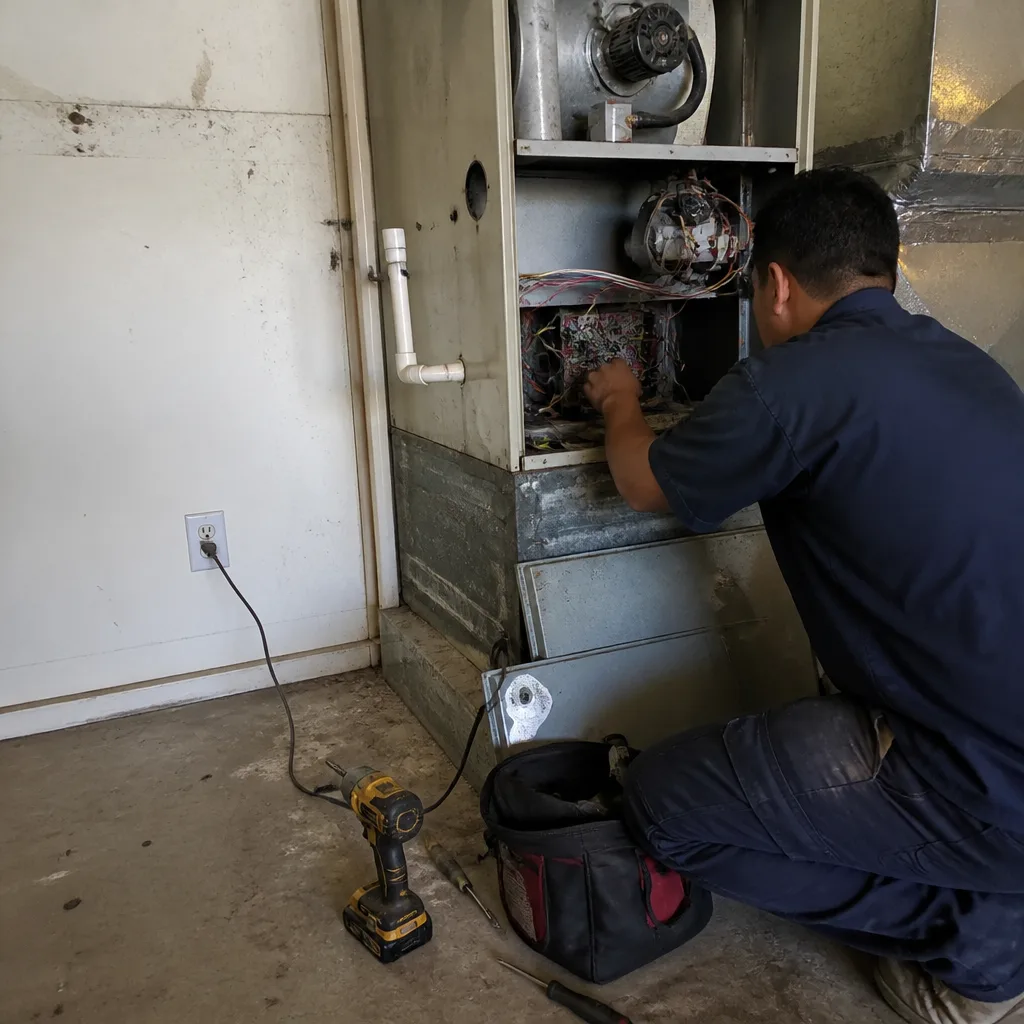
- HVAC systems that run constantly in summer. If your system can’t hold 78°F on a 100°F Murrieta afternoon without running nonstop, the system is either undersized for the home’s heat load, low on refrigerant, or losing efficiency through the ductwork. Many 1990s-era Murrieta installs used flexible duct in unconditioned attics, where temperatures hit 140°F on summer afternoons. An aging duct system with failed insulation is the equivalent of running your A/C with the windows half open.
- Uneven temperatures between rooms. A 5°F to 10°F temperature difference between rooms on the same floor usually points to duct leakage, not a thermostat problem. In two-story Murrieta homes, the differential also reflects inadequate return air on the second floor, a design shortcut common in the 1990s.
None of these signals are things to fix as DIY projects. Electrical panel work and HVAC diagnostics involve genuinely dangerous components, and we recommend a licensed professional for any work beyond changing a filter or resetting a breaker. For context on when professional help is essential, see our DIY vs Professional Construction: The Murrieta Homeowner’s Decision Guide. What you can do as a homeowner is recognize the signals and act on them before a remodel adds load to a system that’s already marginal.
The Triage System: Monitor, Schedule, Act Immediately
Not every warning sign is an emergency. In fact, treating every crack as a structural crisis leads to unnecessary spending, and treating every structural signal as cosmetic leads to compounding damage. The skill is sorting signs into the right category. Here’s the triage system we walk through with Murrieta homeowners:
Monitor: Cosmetic signals that need observation, not action
- Hairline vertical cracks under 1/16 inch in stucco or drywall
- Minor paint hairline cracking at interior wall corners
- Light surface rust on exterior hardware or gate hinges
- Faint efflorescence on a landscape retaining wall with no other symptoms
- Slight shingle granule accumulation in gutters on an older roof with no other signs
Document these with photos and dates. Re-check quarterly. If anything changes in width, length, or pattern, escalate it.
Schedule: Conditions that need professional repair, but not immediately
- Cracks between 1/16 and 1/8 inch that have been stable for 12+ months
- Flashing sealant that shows UV degradation but hasn’t separated
- Baseboard staining on an exterior wall with no active water source identified
- HVAC systems that run long cycles but maintain temperature
- Minor rot on a fascia board or exterior trim piece
These are conditions where intervention now prevents a bigger repair later. Think of them the way you think about a tire with 4/32 of tread left: not an emergency, but not something to ignore through another Murrieta summer. Our General Contractor Maintenance Checklist for Murrieta Homeowners covers how to schedule these preventive repairs.
Act Immediately: Conditions that indicate active failure
- Cracks over 1/8 inch that are new, growing, or paired with sticking doors or windows
- Horizontal cracks in block walls, foundation stems, or retaining walls with any visible displacement
- Warm outlet covers, repeated breaker trips, or any smell of electrical overheating
- Water stains on ceilings or active water intrusion through any penetration
- Sagging roof planes, visible rafter deflection, or shingle lifting across a wide area
- Any structural member (beam, post, rafter, joist) with visible cracking, splitting, or deflection
When a signal lands in the act-immediately category, the cost of delay compounds. A roof leak in Murrieta that starts in December might not show interior staining until February, but by then the sheathing under that section is already deteriorating, and the repair has grown from a flashing patch to a deck section replacement.
The earlier you classify a developing condition correctly, the more control you have over scope and cost. That’s the fundamental principle behind the entire warning sign framework, and it applies whether you’re evaluating a crack in a stucco wall or deciding between repair and replacement on a 25-year-old roof.
Siding, Window, and Hardscape Signs That Precede Bigger Failures
Some of the most expensive Murrieta home repairs begin with signals in the exterior systems. Siding, windows, and hardscape work as the skin of your property, and they telegraph structural or moisture problems before those problems reach the interior.
Siding signals. Murrieta homes use primarily stucco, with James Hardie fiber cement as a common replacement or upgrade. Stucco failure usually first appears as cracking, as covered above, but also as bulging or a “drummy” sound when tapped, which indicates the stucco has separated from its lath. Hardie siding signals are different: look for swelling at board ends, which means moisture is entering behind the siding through failed caulking or missing flashing. Any siding system that shows separation at trim joints is a pathway for water, and in Murrieta’s wet-winter/dry-summer cycle, that pathway expands and contracts, working water deeper each year.
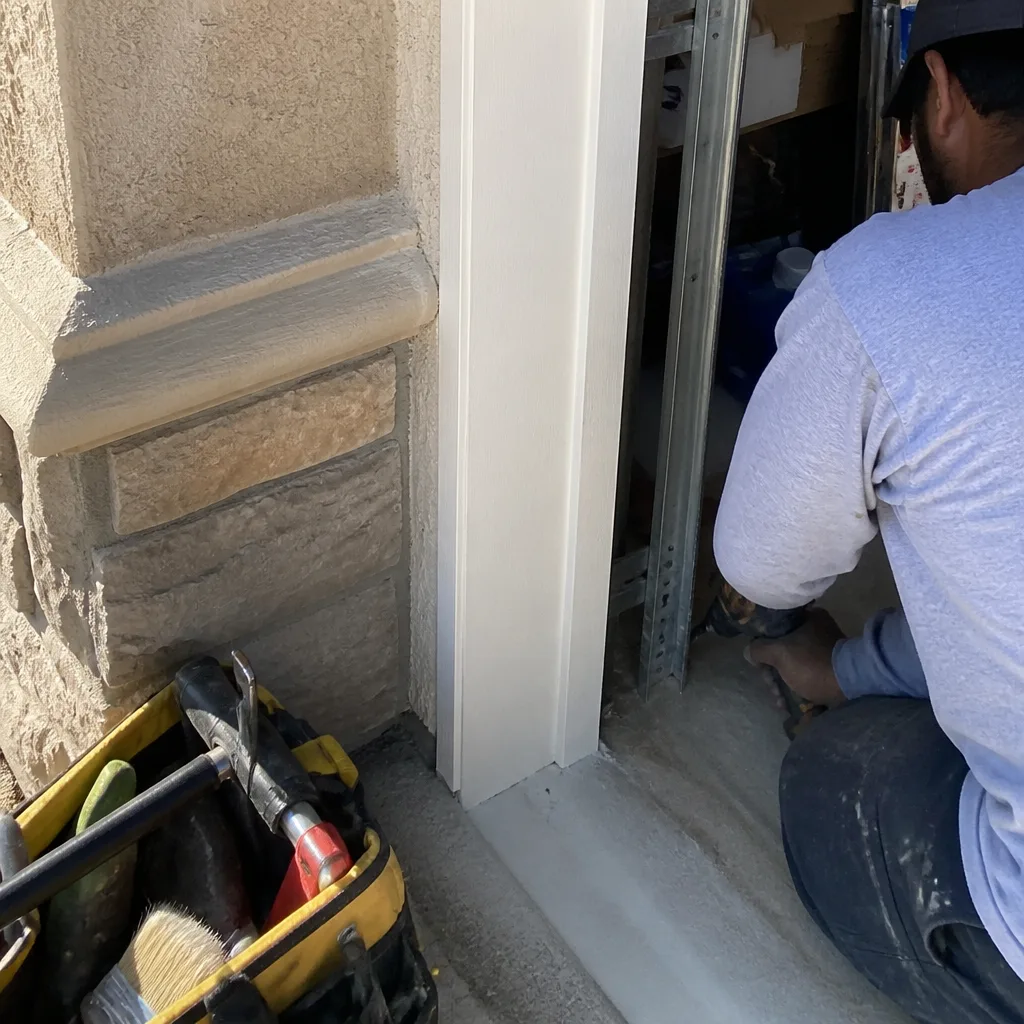
Window signals. Fogged glass between panes means the insulated glass unit seal has failed, and the window’s thermal performance is gone. That’s straightforward. Less obvious: a window that’s hard to operate, or that lets visible daylight through around the frame. Both indicate frame warping or rough-opening settlement. The brands installed in Murrieta homes vary widely, from builder-grade vinyl to premium lines like PGT and CGI, but even the best window fails if the rough opening wasn’t flashed correctly. Manufacturers specify installation details for a reason, and installation to the brand’s spec is the single biggest factor in how a window performs over 20 Murrieta summers.
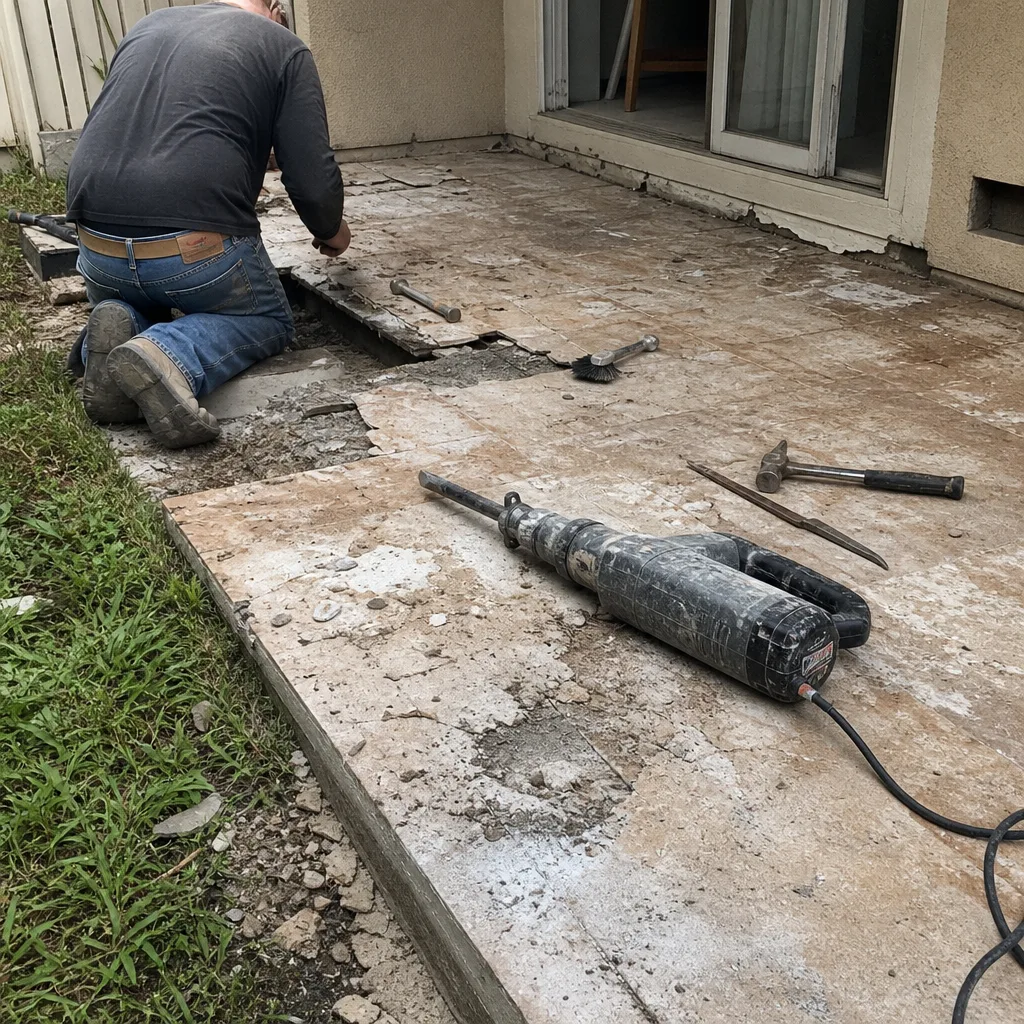
Hardscape signals. Pavers that sink, crack, or separate are usually a base preparation issue, not a paver quality issue. Murrieta’s clay soil expands and contracts, and a paver patio built directly on uncompacted native soil will move within the first two seasons. Sinking is the visual signal that water is also pooling beneath the surface, which creates erosion cycles. Hardscape replacement is one of the more preventable expenses in home ownership, because the failure is usually design-stage, not material-stage.
A full-scope contractor evaluates all these systems together, because they interact. The window that leaks feeds moisture behind the siding below it. The paver patio that sinks directs water toward the foundation. The roof flashing that fails sends water down an exterior wall. Seeing the systems as one connected envelope, rather than five separate projects, is what changes the repair conversation from “which trade do I call first” to “what’s the actual sequence of intervention here.” That’s how we approach Pinecrest Contractors home evaluations in Murrieta, and it’s the reason single-point accountability matters more than most homeowners realize.
Common Mistakes to Avoid
- Painting over cracks without diagnosing them. Paint hides evidence. If the crack is active, you haven’t fixed anything, you’ve simply made it harder to monitor. If the crack is cosmetic, paint is fine. The diagnostic step has to come first.
- Caulking windows and doors without checking flashing. Caulk is a surface seal. It doesn’t replace missing or improperly lapped flashing behind the stucco. Caulking a window that’s leaking at the rough opening buys you a season at best, and it often masks the problem long enough for the damage to spread.
- Ignoring granular accumulation in gutters. In Murrieta’s heat, shingle granule loss accelerates on south and west planes. Clean gutters tell you a lot about roof health if you actually look at what’s in them. Granular buildup is your earliest roof replacement warning.
- Assuming newer construction means no structural issues. Murrieta homes built between 1990 and 2005 can have soil settlement, panel deficiencies, and duct design shortcuts. Age is a risk factor, not a clean bill of health.
- Replacing one system in isolation without evaluating the adjacent systems. A roof replacement that doesn’t address flashing at the chimney or wall intersections just moves the leak risk around. A window replacement that leaves failed siding in place creates a future repair at the new window’s edge. Think in systems, not silos.
- Waiting for a visible interior leak before investigating roof or flashing conditions. By Murrieta standards, interior staining is a late-stage signal. The equivalent of waiting for chest pain before checking your blood pressure.
- Treating all cracks as equal. A 1/32-inch crack in a poured concrete patio is a cosmetic issue. A 1/8-inch horizontal crack in a block wall is a structural warning. Same word, different problem entirely.
When to Call a Professional
The monitor-schedule-act framework tells you what to do, but the practical question is when to bring in someone who does this for a living. Call a professional when: any crack exceeds 1/8 inch, a crack changes over a six-month monitoring period, any door or window suddenly sticks in its frame, any outlet feels warm, any breaker trips more than once under the same load, you see water staining on any ceiling, or you notice visual sagging along any roof plane. These are not conditions where watching and waiting improves outcomes. Pinecrest Contractors offers free estimates in Murrieta. Call (855) 702-1622 to schedule a walk-through, and we’ll give you an honest classification of what you’re seeing, what it means, and what intervention actually costs.
See the difference
 Before
 After
 Before
 After
 Before
 After
Frequently Asked Questions
Foundation crack repair in Murrieta typically ranges from $500 to $4,000 depending on whether the crack is static or active, whether it’s structural or cosmetic, and whether the repair involves epoxy injection, carbon fiber reinforcement, or full underpinning. Cosmetic crack repair in stucco falls at the low end, while active settlement requiring piering can exceed $10,000 in severe cases. The single biggest cost variable is whether the movement has stopped or is still ongoing, which is exactly why professional evaluation matters before any repair quote. Call (855) 702-1622 for an exact scope and estimate.
Yes. A horizontal crack in a block wall indicates lateral pressure against the wall, typically from expanding soil, and it’s one of the most significant structural warning signs a Murrieta homeowner can observe. Vertical cracks in block are often cosmetic or low-severity, but horizontal displacement means the wall is bending in a way it was never designed to bend. In clay-heavy Murrieta soils, horizontal cracks on retaining walls and stem walls usually correspond to drainage problems or over-saturation behind the wall, and the fix often involves drainage correction as much as wall repair.
Worry when a stucco crack exceeds 1/8 inch, runs horizontally or in a stair-step pattern, appears suddenly, or is paired with sticking doors or windows in the same wall plane. Hairline vertical cracks and minor spider web cracks in stucco are usually shrinkage-related and cosmetic, especially in Murrieta’s dry climate where the stucco cures quickly and shrinks. The key variables are width, orientation, and whether the crack is changing. If all three indicators are benign, monitor it. If any one of them is not, get an evaluation.
Look for granular accumulation in gutters, visible blistering on shingle surfaces, lifting shingle edges, and separated flashing sealant at penetrations. These are the Murrieta-specific warning signs driven by UV and heat exposure. A roof that shows granule loss across more than 30 percent of its surface area, or that has reached 18 to 22 years of age in Murrieta’s sun-heavy climate, is typically in the replacement window rather than the repair window. An attic inspection that shows daylight through the decking or wet sheathing confirms the timeline. Call (855) 702-1622 for a free roof evaluation and honest replacement-or-repair advice.
Lights dimming when the A/C compressor starts indicates a voltage drop caused by undersized service wiring, a loose connection at the panel, or a marginal breaker condition. In 1990s-era Murrieta homes, this signal is common and usually points to the panel and service entrance rather than the HVAC equipment itself. The condition warrants professional electrical evaluation because the loose connection that causes dimming can also generate heat, and heat in an electrical panel is a fire risk, not a performance annoyance.
The first signs of foundation problems in Murrieta are usually diagonal cracks at door and window corners, stair-step cracks in exterior block or brick, doors that no longer latch properly, and gaps that open between ceiling and wall. On hillside lots and homes built on filled ground, the same signals may appear first as exterior stucco cracks or hardscape that sinks along one property edge. Any of these signals, combined with visible exterior cracking, is enough to schedule a professional evaluation before doing any interior or exterior finishing work.
The Bottom Line
Construction warning signs are a language, and once you learn to read it, you stop being surprised by repair costs. Cosmetic cracks need paint. Settlement cracks need evaluation. Structural cracks need engineering, and the difference between these outcomes is years, not dollars, when you catch them in the right window. Murrieta’s specific climate and soil conditions mean the warning signs look a certain way here, and a homeowner who understands those patterns makes better decisions with less stress. If you’re seeing anything described in this guide and want a professional read on it, home renovation evaluations in Murrieta are a phone call away. One contractor, every system, from the roof down to the pavers.
Written by the team at Pinecrest Contractors, serving Murrieta since 2014. Explore more guides & resources on home maintenance and repair.