

Last updated October 30, 2026
 Home additions & ADU
 Kitchen remodeling
 Bathroom remodeling
 Roofing
 Windows & doors
 Driveway & pavers
 Fence
Free written scope consultation - allowances, timeline, and change-order rules on paper before a single trade is scheduled
General Contractor Maintenance Checklist for Murrieta Homeowners
A homeowner in Murrieta can go three years without a single visible problem and still be sitting on $30,000 in deferred maintenance. The reason is simple: the damage is happening in attic decking, subfloor framing, and exterior caulk joints long before it shows up on a wall. This guide is written from a contractor’s perspective, not a generic home-maintenance blog’s—see our more guides & resources for related topics. You’ll learn which systems fail quietly in Murrieta’s specific climate, what to check seasonally, and how to document everything so a warranty claim or future permit application doesn’t turn into a fight.
Styles & brands we work with
Quick Answer
A Murrieta home maintenance checklist should prioritize UV and thermal-stress inspections on roofing, stucco, and exterior caulking; HVAC filter and coil service before peak summer and winter; irrigation audits to prevent foundation heave; and documented visual checks of attic ventilation, fascia flashing, and electrical subpanel clearance. The most expensive failures in Murrieta are not dramatic events. They are slow, invisible, and almost always traceable to skipped seasonal inspections.
Table of Contents
- Why Murrieta’s Climate Punishes Homes Differently
- The Trade-by-Trade Maintenance Cadence
- The Contractor’s Eye: What Inspectors Miss
- Documentation Protocol That Protects Warranties and Permits
- What a General Contractor Sees vs. a Home Inspector
- Murrieta Seasonal Priority Schedule
- Common Mistakes to Avoid
- When to Call a Professional
- Frequently Asked Questions
- The Bottom Line
Why Murrieta’s Climate Punishes Homes Differently
Murrieta sits in a thermal inversion valley. Summer daytime temperatures routinely climb past 95°F while nights drop into the low 60s. That’s a 30-plus-degree swing in a single day, repeated for months. Materials expand and contract with every cycle. Roofing membranes stretch. Stucco develops hairline cracks at stress points. Exterior caulk loses its bond. Coastal homes get salt and fog; Murrieta homes get solar radiation and thermal cycling. The damage pattern is different, which is why a generic checklist written for a San Diego beach house or a Pacific Northwest bungalow will miss the failures that actually cost Murrieta homeowners money.
Wind-driven dust is the second factor. Murrieta gets consistent afternoon winds pushing fine particulate into every gap: weep screeds, attic vents, electrical panels, window tracks. That dust accumulates and holds moisture against surfaces that should stay dry, accelerating corrosion and rot in places nobody looks. We’ve opened walls in Murrieta homes and found dust packed two inches deep behind stucco where weep screeds were partially blocked. That kind of accumulation doesn’t happen in humid climates. It’s specific to inland valley conditions.
Then there’s the irrigation problem. Murrieta developments were built fast during the 2000s and 2010s. Underground irrigation lines run close to foundation footings in many neighborhoods. One slow leak, undetected for two years, creates localized soil expansion against the foundation. The result is heave, a subtle lifting that cracks drywall, sticks doors, and eventually requires foundation repair. A maintenance checklist for Murrieta has to include irrigation inspection precisely because it is not a “roof and gutters” item on most generic lists.
The Trade-by-Trade Maintenance Cadence
Most checklists organize by month. That works poorly in Murrieta because our seasons don’t follow a textbook calendar. The better approach is by trade and system, with timing tied to the actual thermal and moisture conditions each system faces. Here’s the cadence we recommend to our General Contractor in Murrieta clients.
Roofing: Twice a Year, Pre-Summer and Post-First-Rain
Murrieta UV is intense. Asphalt shingle granules loosen and collect in gutters within five to seven years of installation, even on quality products like GAF Timberline. The first visual cue is usually not a leak. It’s granule loss, visible as bare patches on shingles or gray slurry in rain gutters. Once the granules go, the underlying asphalt mat is exposed to direct UV and degrades rapidly.
- Walk the roof or use binoculars from the ground: check for lifted, curled, or missing shingles.
- Inspect all flashing points: chimney, vent pipes, skylights, valley intersections. Flashing failures account for nearly 70% of roof leaks we see in Murrieta, not shingle failures.
- Clear gutters and downspouts. Wind-driven dust mixes with granule loss and forms a paste that clogs downspouts faster than pure leaf debris.
- Check attic ventilation from inside: soffit intake and ridge or can outlet vents must be unobstructed. A ventilation failure doesn’t show on the roof surface. It shows on the underside of the decking as dark staining or, in bad cases, mold.
HVAC: Pre-Cooling Season and Pre-Heating Season
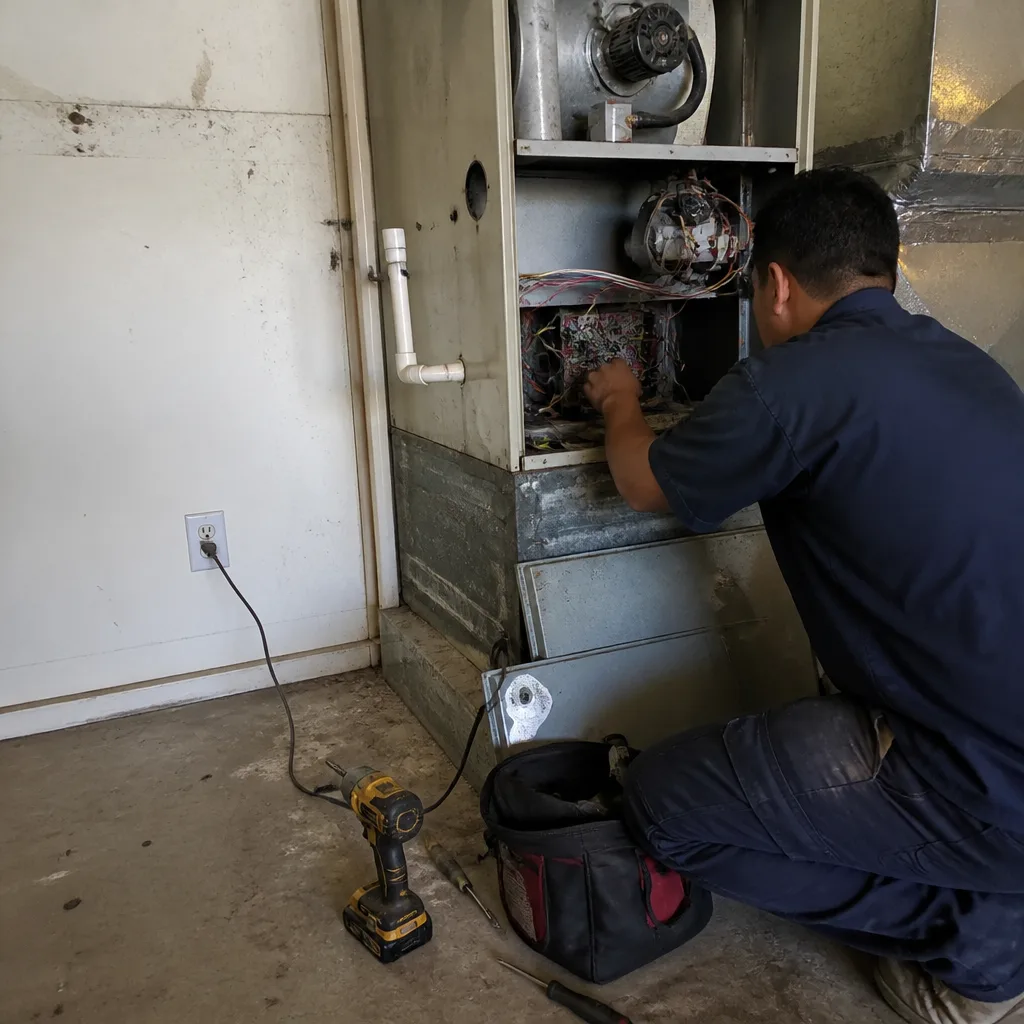
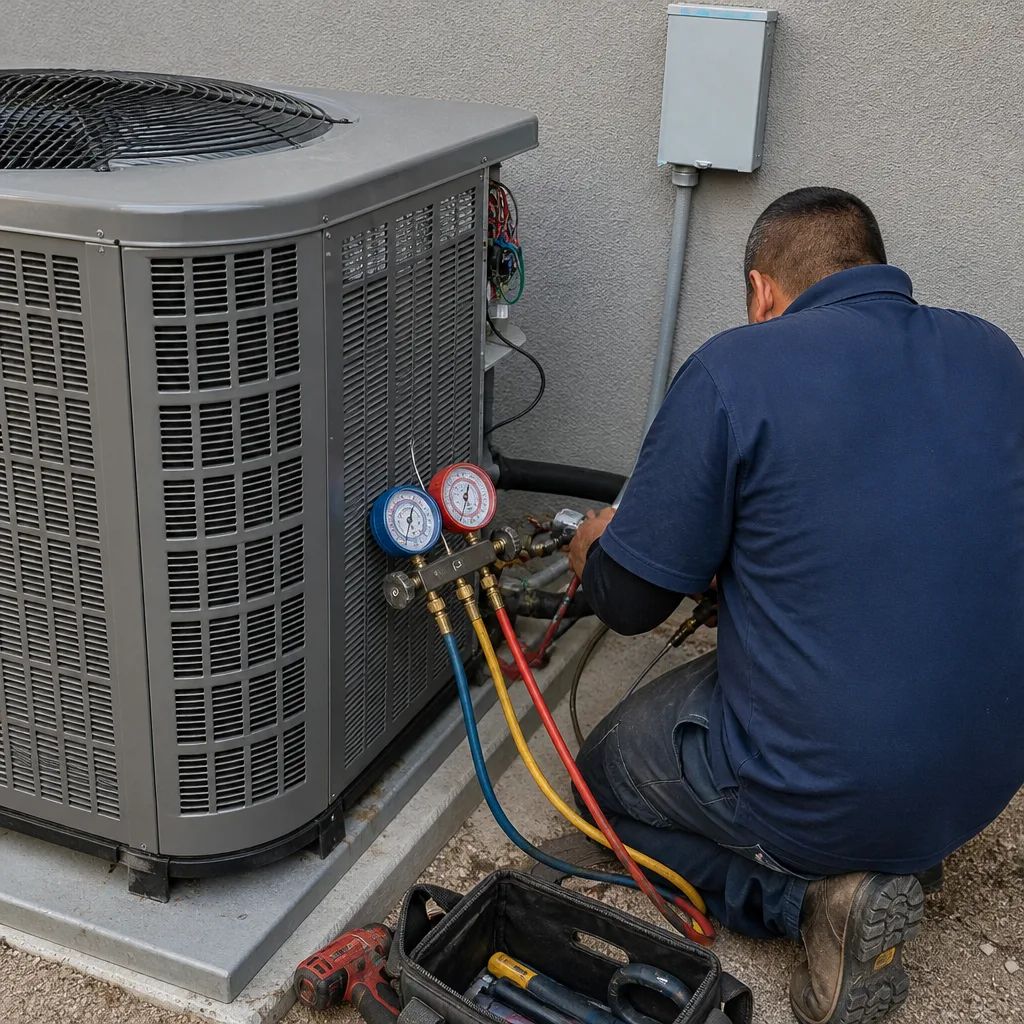
Murrieta summers push air conditioners hard. A heat pump or AC unit that runs for 10 to 12 hours daily accumulates coil dust and loses efficiency quickly. The pre-summer service is non-negotiable. The pre-winter check matters less in Murrieta than in colder climates, but furnace and heat pump reversing valves still need a functional test before the first cold snap.
- Replace or clean return air filters every 60 to 90 days. In homes near open space or new construction, check monthly during summer. Dust loading is extreme.
- Inspect condenser fins for damage and bending. Murrieta’s afternoon winds can blow debris hard enough to bend fin edges.
- Clear the two-foot perimeter around the outdoor unit. Shrubs and stored items restrict airflow and raise operating costs by 10 to 15 percent.
- Test the condensate drain line. Pour water into the drain pan and confirm it flows freely. Clogged condensate lines cause more water damage in Murrieta than roof leaks in some neighborhoods.
Plumbing: Quarterly Visual, Annual Irrigation Audit
The plumbing system itself is not the biggest risk in Murrieta. The irrigation system connected to it is. Buried irrigation lines, old valve manifolds, and improperly winterized backflow preventers are the top sources of hidden leaks that drive foundation heave.
- Check all exposed supply lines and shutoff valves quarterly. Look for corrosion, mineral deposits, or green staining at joints.
- Run a full irrigation cycle during daylight. Watch each zone. Look for pooling, overly wet soil near the foundation, or sprinkler heads that spray onto the house.
- Inspect the water heater anode rod every two years. Murrieta water is moderately hard. Anode replacement extends tank life by three to five years.
- Test the water pressure with a gauge. Anything above 80 psi accelerates wear on valves, hoses, and fixtures. A pressure regulator that fails silently causes fixtures to fail early.
Electrical: Semi-Annual Subpanel Checks
Murrieta’s housing stock includes many homes built during the rapid expansion years. Electrical panels are often undersized for modern loads after EV chargers, heat pumps, and new appliance packages are added. The subpanel clearance issue is one we flag constantly during Home Remodeling in Murrieta walkthroughs.
- Open the main panel and subpanel. Look for signs of heat: discolored breakers, melted wire insulation, burn marks.
- Check that breakers are not double-tapped and that the panel has at least 36 inches of clear working space in front.
- Test GFCI and AFCI breakers monthly using the test button. In homes older than 15 years, these devices wear out and fail without notice.
- If the panel is warm to the touch during summer, call an electrician. A warm panel under heavy AC load is a pre-failure signal.
Exterior Envelope: Stucco, Caulk, Windows, Doors
Murrieta’s stucco systems are vulnerable to hairline cracking from repeated thermal cycles. Small cracks are not urgent. Cracks wider than a nickel or cracks that recur in the same spot after repair indicate structural movement behind the stucco.
- Inspect all stucco surfaces after the first significant rain of the season. Wet stucco shows cracks more clearly.
- Check caulk joints around windows, doors, and wall penetrations annually. In Murrieta, caulk fails in as little as three to five years due to UV exposure. Failed caulk allows water intrusion that rots framing behind the stucco.
- Operate every window and door twice a year. Sticking or binding is often a sign of foundation movement or frame swelling.
- Check exterior wood surfaces: fascia boards, eaves, window sills. Look for peeling paint, soft spots, or visible wood grain raised by moisture. Exterior wood in Murrieta needs re-painting or re-sealing every three to five years, faster than in coastal climates.
The Contractor’s Eye: What Inspectors Miss
Home inspectors follow a standard-of-practice checklist. They spend two to four hours in a home and produce a report that satisfies lenders and purchase agreements. The contractor’s eye is different. We see the home as a system of interacting materials and installation choices, and we notice the three things that inspectors most often pass over.
Attic Ventilation Imbalance
An inspector checks whether ventilation exists. A contractor calculates whether it is balanced. Murrieta attics need roughly one square foot of net-free vent area per 150 square feet of attic floor. But the intake and exhaust must be balanced. Too much exhaust with not enough intake creates negative pressure that pulls conditioned air from the living space into the attic, driving up cooling costs and pulling dust into the insulation. Too little exhaust traps heat, cooking shingles from below and shortening the roof’s service life. We measure the ratio. Inspectors rarely do.
Fascia Flashing Gaps
The fascia board runs along the roof edge, directly behind the gutter. Murrieta’s wind-driven rain can push water up and under the first course of shingles at the eave edge. If the drip edge flashing is missing, short, or improperly lapped, water wicks back into the fascia. The result is rotted fascia board that no one sees until a gutter pulls away from the house. This is a $400 to $900 repair that could have been prevented with a $50 flashing detail. Inspectors miss it because it requires looking at roof-gutter-fascia intersections from a ladder, not from the ground.
Subpanel Clearance Violations
Electrical panels require working clearance: 36 inches deep, 30 inches wide, and 6 feet 6 inches of headroom. Many Murrieta garages have subpanels installed during the original build. Over the years, homeowners add shelving, storage cabinets, or a second refrigerator directly in front of the panel. The code violation is real, but the bigger risk is practical: in an emergency, the panel is blocked. During a remodel, the inspector may fail the final electrical inspection until the obstruction is removed, adding delays and cost. A contractor flags this during the planning phase. A home inspector notes it as “recommend further evaluation.”
Documentation Protocol That Protects Warranties and Permits
Maintenance documentation is boring until you need it. When a roofing manufacturer denies a warranty claim because the homeowner can’t prove regular inspections, or when a city permit office questions whether a repair was performed to current code, the binder of photos and receipts becomes the most valuable object in the house. Here’s the protocol we recommend.
- Create a digital maintenance log. Use a folder on your phone or a cloud drive. Name it with your street address. Create subfolders by system: roof, HVAC, plumbing, electrical, exterior, foundation.
- Photograph everything. Take wide shots that show the whole area and close-ups that show specific defects. Date-stamp each photo. A photo without a date is worthless in a warranty dispute.
- Save all invoices and receipts. Even a $12 tube of caulk. The invoice proves the material was bought and presumably installed by someone.
- Note the contractor’s name, license number, and date for every professional repair. When you apply for a future permit for a Home Renovation in Murrieta, the city will ask what has been done previously. Clear records speed the process.
- Pull a seasonal summary. Once every 12 months, write a one-page summary of what was inspected, what was repaired, and what remains on the watch list. This single document proves diligence if a claim is ever challenged.
This documentation protects more than warranties. It protects resale value. When you sell, the buyer’s inspector will ask about the roof, the HVAC, the water heater. A clean maintenance record answers those questions before they become negotiating chips.
What a General Contractor Sees vs. a Home Inspector
Both professionals have value. They perform different functions. Knowing when to hire which one saves money and prevents disappointment.
A home inspector is a generalist. They evaluate the visible condition of the home against a standard checklist. They identify defects that affect the purchase decision. Their report is a snapshot, not a diagnosis. They are not allowed to quote repair costs or perform repairs in most cases, and they don’t design solutions.
A general contractor sees the home as a construction project. We look at how systems were installed, whether materials are performing as expected, and what it would cost to correct each issue. When we walk a Murrieta home, we’re not just checking boxes. We’re sequencing repairs: which problems are urgent, which can wait, which repairs interact with each other. That’s the service we provide at Pinecrest Contractors home.
The practical guidance: hire a home inspector when buying or selling. Hire a general contractor when you’re planning to stay, planning a remodel, or trying to prioritize maintenance spending across multiple systems. If you’re trying to decide whether a stucco crack is cosmetic or structural, a contractor’s eye is worth more than an inspector’s report.
Murrieta Seasonal Priority Schedule
Murrieta doesn’t have four equal seasons. We have a long, hot, dry summer; a brief, mild winter with occasional rain; and transitional shoulder seasons. Here’s how the maintenance calendar maps to reality.
Spring: March through May
- Full roof inspection after winter rains. Check for granule loss, lifted shingles, and damage from wind.
- HVAC: schedule the pre-summer service. Coil cleaning, refrigerant check, condenser inspection.
- Stucco and caulk inspection. Repair cracks before the dry heat widens them.
- Irrigation audit before summer watering demand increases. Look for leaks near the foundation.
- Gutter cleaning. April winds drop pollen and dust. May brings the first serious heat.
Summer: June through September
- Monthly HVAC filter replacement during peak cooling months.
- Monitor attic temperature. If the attic is hotter than 130°F on a 95°F day, ventilation is failing.
- Check for insect activity. Termites and carpenter ants are active in Murrieta’s summer, especially near irrigation and exterior wood.
- Water all exterior wood surfaces. Dry rot begins when wood moisture drops below 20 percent for extended periods.
Fall: October through November
- Full exterior envelope inspection: stucco, siding, windows, doors, and all caulk joints.
- Gutter cleaning before the rainy season. Murrieta’s first real rain can arrive as early as late October.
- Roof inspection focused on flashing and valley seals. If a leak is going to happen, it will happen in the first major storm.
- Heating system test. Run the furnace for 30 minutes before you actually need it.
- Drain irrigation lines and insulate exposed pipes if freeze is forecast. Murrieta does get frost, and unprotected pipes do burst.
Winter: December through February
- Check for roof leaks after every significant rain. Go in the attic and look for dark stains on decking.
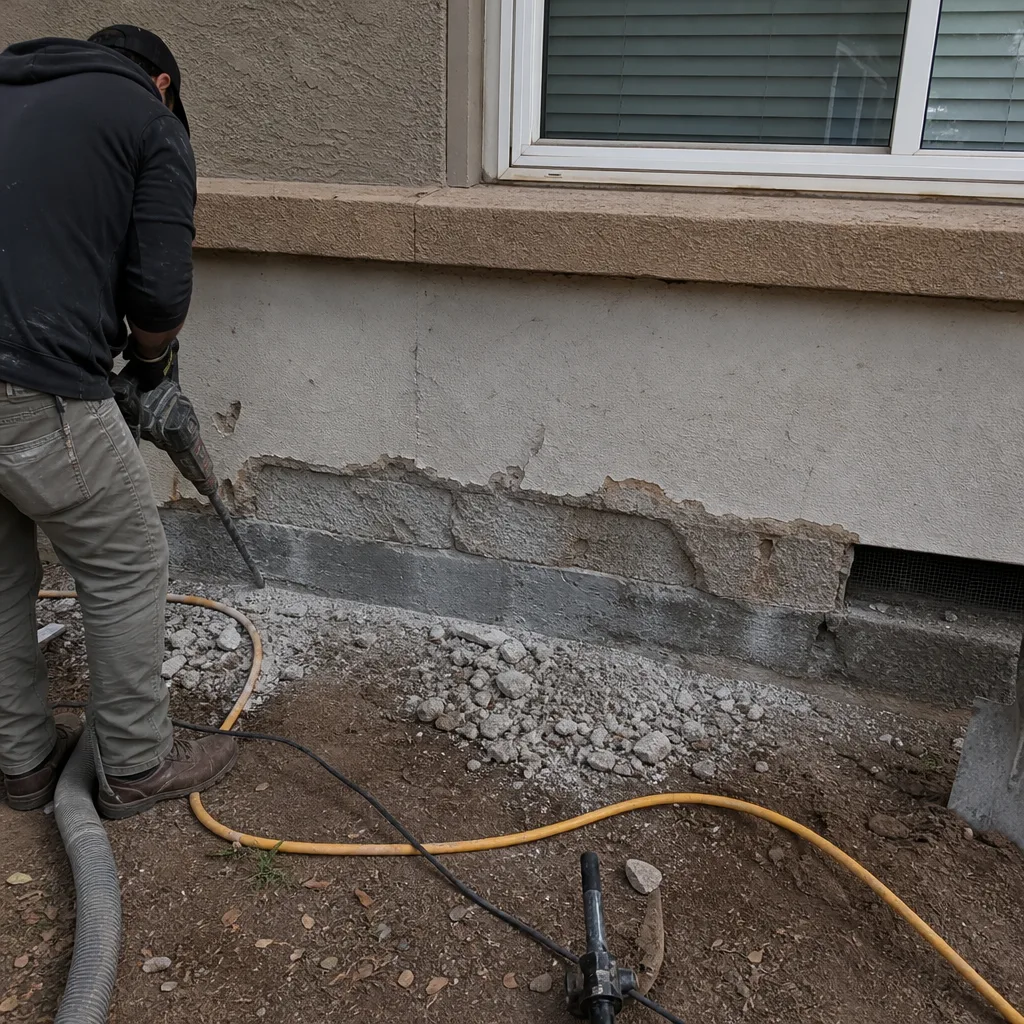
- Inspect foundation for cracks or new movement. Winter is when heave becomes visible because soil moisture changes.
- Check interior humidity. Murrieta winters are dry, but closed-up homes can still develop condensation on windows, which leads to sill rot.
- Test all GFCI outlets. Winter storms and power fluctuations can shorten device life.
Common Mistakes to Avoid
- Assuming no visible problem means no problem. The most expensive Murrieta repairs we see are in homes where nothing ever looked wrong from the outside. Attic decking rot, subfloor termite damage, and foundation heave all develop invisibly.
- Skipping the annual irrigation audit. Irrigation leaks near the foundation are the single most preventable cause of structural movement in Murrieta homes. The fix is often a $20 valve or a $50 sprinkler head repair, but the damage from ignoring it can reach $15,000 to $30,000.
- Painting over stucco cracks. Acrylic paint seals the crack cosmetically but doesn’t address the movement behind it. The crack returns, and water intrusion continues underneath the paint film.
- Replacing shingles without checking ventilation. A new roof on an under-ventilated attic will fail early. We’ve seen shingles cook from below and curl within five years on homes that had their roof replaced but never addressed the intake/exhaust imbalance.
- Ignoring the subpanel until the remodel starts. The subpanel clearance issue only becomes urgent when the inspector walks the home for a permit. Fix it during routine maintenance, and the remodel goes smoother.
- Documenting nothing. A homeowner who can’t prove maintenance happened is in a worse position than one who did no maintenance at all. Documentation is cheap insurance.
When to Call a Professional
Some maintenance tasks are DIY. Others are not. Any work at height, any work involving electrical connections, any work involving gas lines, and any work involving structural evaluation should be left to a licensed contractor. Specifically, call a professional when you see recurring stucco cracks wider than a nickel, when your attic shows dark staining on the decking, when your panel is warm to the touch, when your foundation shows new cracks or doors suddenly stick, or when you discover water intrusion behind any exterior finish. These are not maintenance items. They are diagnostic and repair scenarios. For deeper guidance, read our General Contractor Troubleshooting: Common Problems and How to Fix Them. Pinecrest Contractors offers free estimates in Murrieta; call (855) 702-1622 to schedule a walkthrough.
Frequently Asked Questions
A visual maintenance inspection by a general contractor in Murrieta typically costs between $200 and $500 depending on home size and scope; for help selecting the right professional, see How to Hire a Construction Contractor in Murrieta: A Step-by-Step Guide. This is a diagnostic walkthrough, not a home inspection report, and it often pays for itself by identifying one problem before it becomes a major repair. Call (855) 702-1622 for an exact quote; estimates are free.
Twice a year: once in spring after the last winter rain, and once in fall before the first major storm. Murrieta’s UV intensity ages roofing materials faster than coastal climates, so a spring and fall inspection catches granule loss and flashing failures before they become roof leaks.
Foundation repair from irrigation-driven soil heave. A slow irrigation leak near the foundation can go undetected for two to three years while it expands clay-heavy soil against the footing. The repair cost often exceeds $20,000. The preventive fix is a $50 to $200 irrigation component repair during an annual audit.
You can and should perform routine visual checks: gutters, caulk joints, visible plumbing, HVAC filters, panel appearance. But a contractor’s eye catches details that a homeowner’s eye doesn’t, especially attic ventilation balance, flashing details, and subpanel clearance. Consider a professional walkthrough every two to three years even if you handle the routine items yourself.
With a professional contractor using fixed pricing and written line-item quotes, it should not. Any contractor who discovers hidden damage should stop work and present a written change order before proceeding. If a contractor starts a repair and the price climbs without documentation, that’s a red flag. Call (855) 702-1622 for a written, fixed-price estimate on any repair in Murrieta.
Plan on two to four hours for a thorough visual inspection of the roof, attic, foundation, exterior envelope, HVAC, plumbing, and electrical systems. A contractor who spends less than two hours is not looking closely enough. The walkthrough should end with a prioritized list of findings and suggested timing for each repair.
The Bottom Line
A Murrieta home maintenance checklist that ignores thermal cycling, UV intensity, wind-driven dust, and irrigation-driven soil movement is worse than no checklist at all. It creates false confidence. The real value of this guide is not the list of tasks. It’s the understanding of which systems fail quietly in this specific climate and how to catch those failures before they become expensive. Inspect seasonally, document everything, and bring in a contractor’s eye when the findings go beyond a simple repair. Murrieta homes are solid when maintained properly. The ones that cost $30,000 to fix are the ones where nobody looked.
Written by the team at Pinecrest Contractors, serving Murrieta since 2014.
See the difference
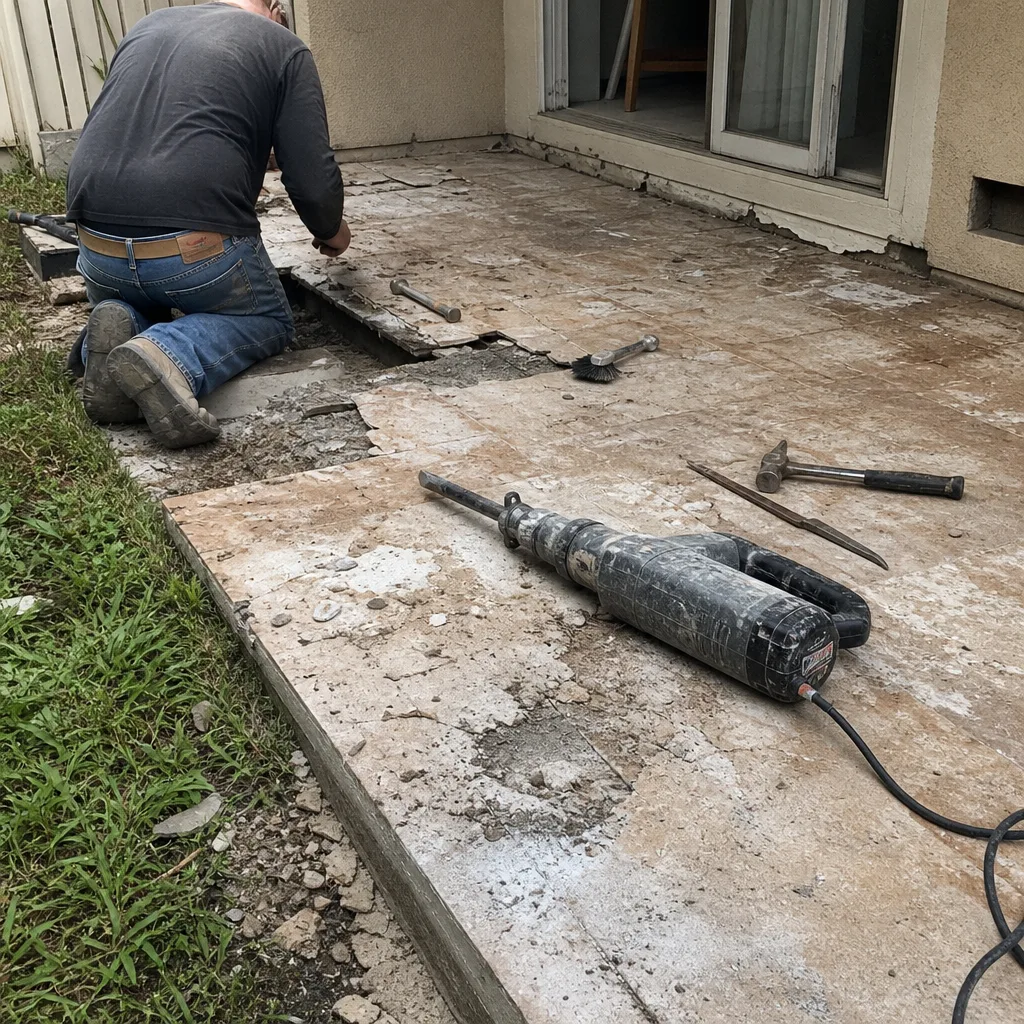
 Before
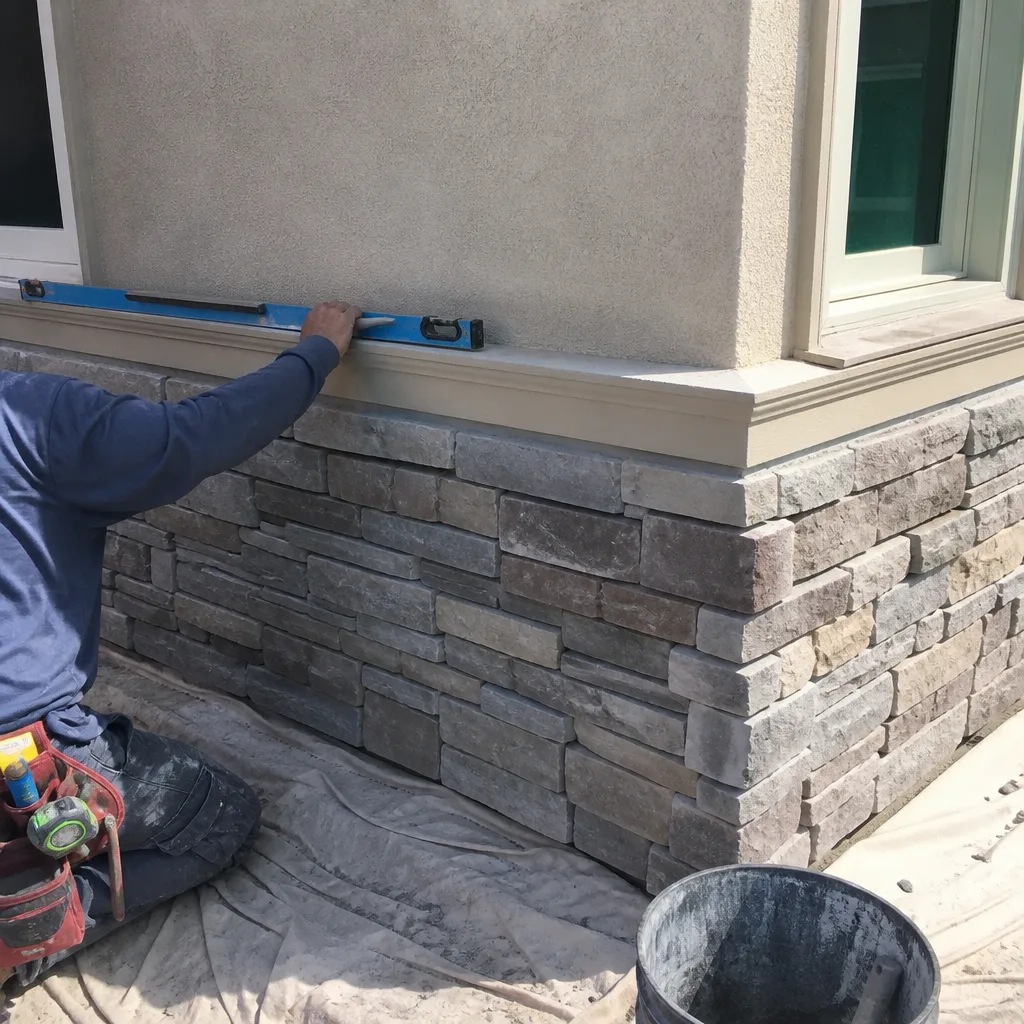
 After
 Before
 After
 Before
 After